
How to Choose the Right Crane Manufacturing Company for Your Industrial Needs?
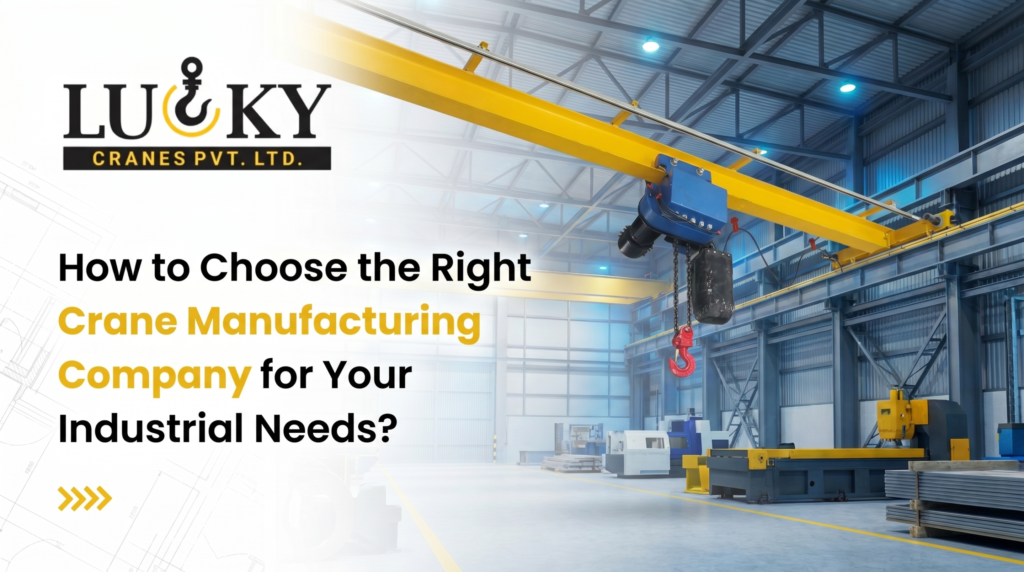
Selecting the right crane manufacturing company is one of the most important decisions for industries that depend on material handling, heavy lifting, and operational efficiency. A reliable crane partner helps improve productivity, workplace safety, and long-term cost savings. However, with multiple manufacturers available in the market, choosing the right supplier can be challenging. Industrial buyers must evaluate product quality, customization capabilities, after-sales support, compliance standards, and industry experience before making a final decision. This guide explains the key factors industries should consider while selecting a trusted crane manufacturing partner for their business operations. Why Choosing the Right Crane Manufacturing Company Matters On the other hand, an experienced crane manufacturing company delivers dependable lifting solutions designed for performance, safety, and durability.Industries such as construction, steel plants, warehouses, power plants, shipping, engineering, and manufacturing heavily rely on cranes for smooth operations. Industrial cranes are long-term investments. Poor-quality equipment can result in: Increased maintenance costs Frequent operational downtime Safety risks Reduced lifting efficiency Higher energy consumption Key Factors to Consider Before Selecting a Crane Manufacturing Company 1. Industry Experience and Expertise Experience plays a major role in crane manufacturing. Companies with years of expertise understand different industrial challenges and can provide customized solutions accordingly. An experienced manufacturer can recommend the right crane configuration based on load capacity, span, height, and operational requirements. When evaluating a manufacturer, check: Years in business Industries served Types of cranes manufactured Previous project portfolio Technical expertise 2. Product Range and Customization Capabilities Every industry has different lifting requirements. Therefore, the selected crane manufacturing company should offer multiple crane solutions and customization options. Common crane types include: Crane Type Application EOT Cranes Heavy industrial lifting Gantry Cranes Outdoor material handling Jib Cranes Small workstation lifting Double Girder Cranes High-capacity operations Single Girder Cranes Medium-duty industrial use Customization features may include: Variable lifting capacities Remote control operation Customized span and height Safety automation Energy-efficient systems Evaluate Manufacturing Quality Standards A reliable crane manufacturing company follows strict quality control processes and international manufacturing standards. Manufacturers using advanced fabrication technologies and precision engineering generally produce more durable and reliable cranes. According to the Industrial Safety and Health Administration, proper crane safety and inspection procedures are critical for industrial lifting operations. Important Certifications to Check ISO Certification BIS Compliance CE Standards Load Testing Certifications Safety Inspection Reports Assess Technology and Engineering Capabilities Modern industrial operations require technologically advanced crane systems.Advanced engineering improves operational efficiency and reduces maintenance requirements.Leading engineering standards are also supported by Crane Manufacturers Association of America. Therefore, industries should evaluate whether the manufacturer uses: CAD-based crane design Automation systems Smart safety controls VFD technology Energy-efficient motors Anti-collision systems Check Installation and After-Sales Support A crane is not just a product; it requires professional installation, regular maintenance, inspections, and technical support. Reliable after-sales support helps minimize downtime and ensures long-term operational efficiency. Before finalizing a crane manufacturing company, verify: Service Support Checklist Installation assistance AMC services Emergency breakdown support Spare parts availability On-site inspections Technical training Compare Safety Features Industrial safety should always be a top priority when selecting a crane supplier.Modern safety systems help industries reduce workplace accidents and improve operational reliability. According to International Organization for Standardization, industrial lifting equipment should comply with globally Verified safety and quality standards. Important Crane Safety Features Overload protection Emergency stop systems Limit switches Anti-sway technology Braking systems Load monitoring systems Evaluate Pricing vs Long-Term Value A high-quality crane may have a slightly higher initial investment but provides better ROI over time. Lowest pricing should never be the only deciding factor. Instead, buyers should focus on overall value, including the following: Product lifespan Energy efficiency Maintenance costs Spare part availability Productivity benefits Importance of Client Reviews and Project Portfolio A trusted crane manufacturing company should have a strong reputation in the market. A proven track record shows reliability and customer satisfaction. Check: Client testimonials Google reviews Industrial case studies Completed project images Industry references Signs of a Reliable Crane Manufacturing Company Look for These Qualities Strong engineering team Transparent pricing Timely project delivery Custom design capability Quality-certified manufacturing Responsive support team These factors help industries choose the right long-term crane partner. Looking for a reliable crane manufacturing company for your industrial operations? Lucky Cranes offers high-performance industrial crane solutions designed for safety, efficiency, and long-term durability. Click Here Why Choose Lucky Cranes? Customized crane solutions Expert engineering consultation Competitive pricing Reliable after-sales support Quality-tested industrial cranes Conclusion Choosing the right crane manufacturing company directly impacts industrial productivity, safety, and operational efficiency. Buyers should carefully evaluate industry experience, product quality, engineering capabilities, customization options, safety standards, and service support before making a final decision. A trusted crane manufacturer not only supplies equipment but also provides long-term operational support and reliable industrial solutions tailored to business needs. FAQs 1. How do I choose the best crane manufacturing company? Choose a company based on industry experience, manufacturing quality, customization options, certifications, and after-sales support. 2. Why is customization important in industrial cranes? Customization ensures the crane matches specific lifting capacities, workspace dimensions, and operational requirements. 3. What certifications should a crane manufacturing company have? Important certifications include ISO standards, safety compliance certifications, and load testing approvals. 4. What industries use industrial cranes? Industries such as manufacturing, construction, steel plants, warehouses, logistics, and power plants commonly use industrial cranes. 5. Why is after-sales support important for cranes? After-sales support helps reduce downtime through maintenance services, spare parts availability, and technical assistance.
Electric Wire Rope Hoist Supply Chain and Industrial Growth
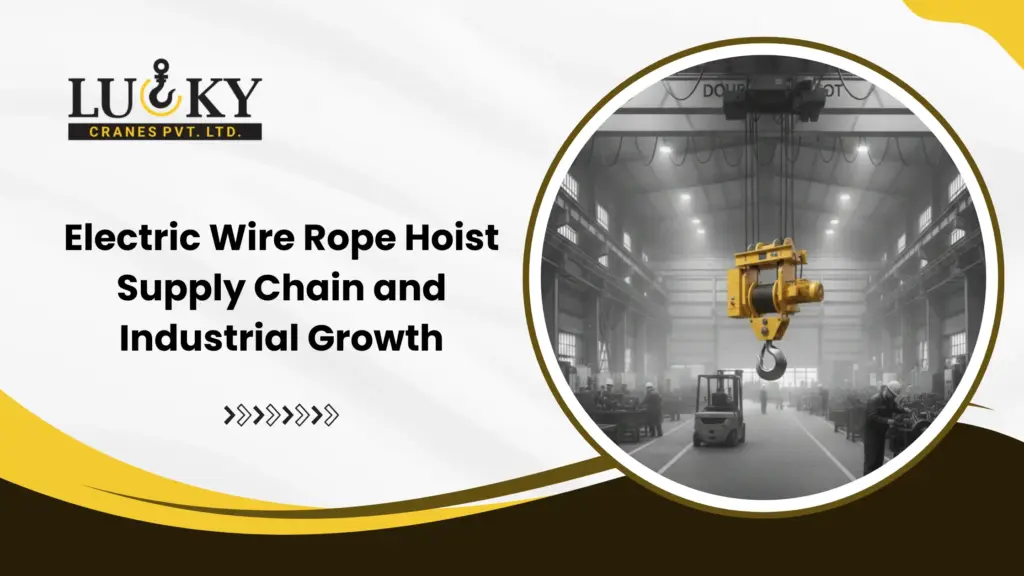
In today’s rapidly growing industrial sector, it is essential to use material handling equipment that can ensure maximum productivity and safety. One of the most used lifting equipment in industries, manufacturing units, warehouses, and construction sites is the electric wire rope hoist. With the rise of industries, the need for a trusted electric wire rope hoist manufacturer is also growing. The electric wire rope hoist is a lifting equipment used to lift and move heavy objects with maximum precision and efficiency. This equipment consists of a strong wire rope wound on a drum, which is powered by an electric motor. This helps industries lift heavy objects with maximum smoothness, reducing manual work and enhancing safety. Role of Supply Chain in Electric Wire Rope Hoist Manufacturing The supply chain of electric wire rope hoists is an important factor that ensures that the industry receives quality products in a timely manner. This is achieved by sourcing high-grade materials such as steel, motors, gearboxes, and electrical components. These materials are then used to produce quality hoists that are robust enough to withstand the harsh conditions in the industry. The supply chain is also responsible for maintaining quality standards in the production of the hoists while at the same time meeting the demand for the product in the industry. Contribution to Industrial Growth The availability of highly efficient lifting equipment provided by a reliable electric wire rope hoist manufacturer is one aspect that contributes to the growth of the industry. This is because modern hoists are designed with increased safety features, high lifting capacities, and energy-saving motors that are suitable for large-scale operations. The use of electric wire rope hoists in the industry helps in the efficient use of time and reduces the costs of manual labor. At the same time, the hoists are designed to increase the safety standards of the industry, thus preventing accidents that could occur when lifting heavy materials. The use of high-quality hoisting equipment in the industry is also beneficial in the expansion of the operations of the industry. This is a contributing factor to the growth of the industry. Applications Across Multiple Industries The electric wire rope hoists have been widely used in various industries due to their ability to ensure the efficient lifting of heavy loads in a safe manner. The strength and precision of the hoists make them an important requirement for the smooth functioning of modern industrial setups. The applications of the electric wire rope hoists include: Manufacturing Plants – The hoists help in lifting various parts of the machines, raw materials, and products within the manufacturing plants. Warehouses – The hoists are used for loading, unloading, and lifting heavy products within the warehouses. Steel and Metal Industries – The hoists are the best solution for lifting heavy metal sheets, coils, and other components within the steel and metal plants. Automobile Industry – The hoists are used within the automobile plants for lifting heavy engines, automobile parts, and equipment. Shipbuilding Industry – The hoists help in lifting heavy components of the ships and heavy equipment used within the ships. Power Plants – The hoists are used for lifting heavy equipment within the power plants, including heavy turbines Conclusion The supply chain of electric wire rope hoists is of vital importance, as it helps in the smooth operation of industries and the overall development of the economy. Every stage of the supply chain is equally important, as it helps in increasing efficiency and productivity in the industry.As industries are growing, the need for advanced electric wire rope hoists is also increasing, and selecting a reliable supplier such as Lucky Crane Pvt.Ltd will definitely help industries attain success with the supply of quality hoists.
Design Standards and Safety Regulations for Goliath Cranes in India
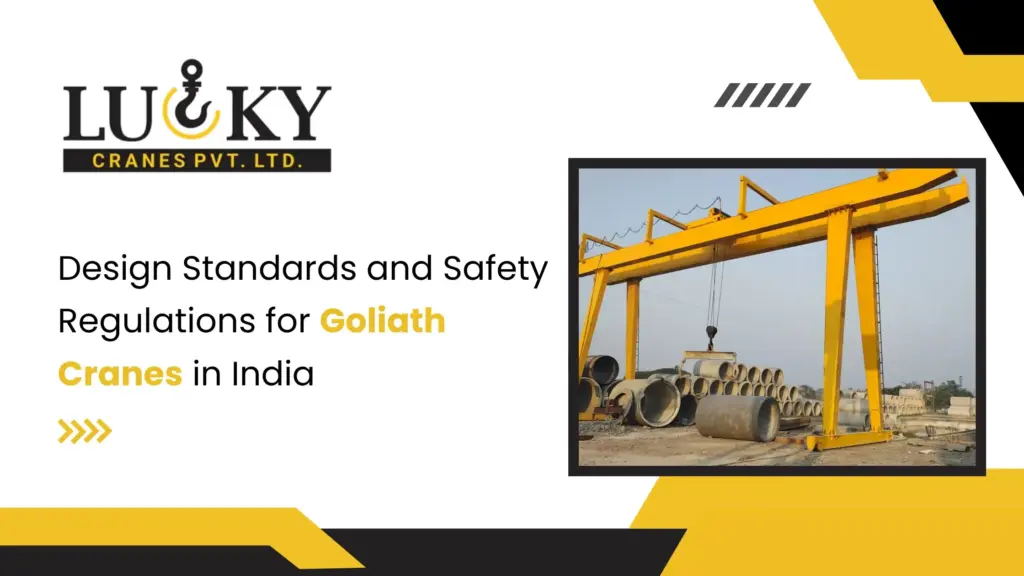
There has been an unprecedented rise in the infrastructure and industry sectors in India in the last decade. Goliath cranes form the most important aspect of this growth process due to the weight they can carry in the most accurate way. At Lucky Cranes Pvt. Ltd., one of the most reputed makers of goliath cranes in India, the firm believes that there is no doubt about the fact that the design specifications and the safety protocols form an essential aspect of any good crane. Definition of a Goliath Crane A Goliath crane or a gantry crane is a kind of overhead crane whose rail travels along rails laid on the ground surface, which are supported by free-standing legs. In contrast with the bridge cranes that run on raised rails, the Goliath cranes do not require support from any external source since they stand independently, hence being suitable for outdoor applications. Standards Governing the Design & Manufacturing of Goliath Cranes in India The manufacturing of goliath cranes in India is guided by many important standards that have been established by the Bureau of Indian Standards (BIS), as well as other globally recognized codes. Every reputable Goliath Crane Manufacturing firm should follow: IS 807:2006 – Practice code for crane and hoist design, construction, assembly, and testing. IS 3177:1999 – Specifications for electric overhead traveling cranes and gantry cranes, including design criteria and lifting capacity. IS 4137:1985 – Safe assembly and installation of overhead cranes. FEM Standards – Indian manufacturers also adhere to European FEM (European Federation of Material Handling) standards for structural strength and duty rating. The criteria provide information about essential design aspects such as structural loads, allowable stresses, fatigue strength, deflection of girders, and categorization of cranes according to their duty cycle. Design Parameters of Goliath Crane An ideal goliath crane requires the fulfillment of a number of structural and mechanical design parameters. The span, SWL, height of lifting, and rate of movement depend upon the purpose for which the crane is required. The frame of the structure, which is mostly made up of high-tensile steel, needs to be able to resist static loads, dynamic loads, wind loads, and earthquake loads where applicable. Looking for a certified Goliath crane manufacturer in India? Lucky Cranes Pvt. Ltd. specializes in manufacturing goliath cranes that meet the Indian standard specifications and international safety standards. Click Here Safety Regulations and Compliance Requirements Safety cannot be compromised in crane operations within an industrial setting. The Factories Act, 1948, of India and its state factory regulations prescribe inspection, testing, and certification of lifting machinery. Other safety regulations include: Third-party inspection by an authorized competent person as per the Factories Act. Testing at 125% of the Safe Working Load (SWL) at the time of installation and after any major overhaul. Fitting of load safety mechanisms, collision avoidance systems, and limit switches. Compulsory training and certification for operators under the guidelines issued by DGFASLI (Directorate General Factory Advice Service and Labour Institutes). Earthing and electrical safety system installation to avoid electrocution accidents. Maintenance Requirements for Long-Term Safety Not only does it become necessary to adhere to the regulations initially, but also to develop a long-term plan regarding the maintenance needs of Goliath cranes. This will involve routine inspection of the structure joints, wire ropes, hooks, brake assemblies, and electric control system. Also, it becomes necessary to perform lubrication procedures, check the alignment of the tracks, and recalibrate safety devices. Maintenance logging is required by law and also helps monitor the crane’s condition. The Importance of Design and Compliance Inability to conform to relevant designs and standards can lead to devastating disasters and fines as well as expensive downtimes. For businesses whose operations depend on goliath cranes, buying a goliath crane that adheres to all the relevant standards is a business necessity. Working with an established Goliath crane manufacturer ensures not only quality design but also compliance with all relevant regulations too. Whether you are planning the construction of a new manufacturing plant or enhancing your existing lift systems, knowledge about design criteria and safety laws will guide you towards the right purchasing decisions, ensuring that your operations stay safe, legal, and effective for many years to come. Last word Whether it is about creating a new plant for manufacturing processes or upgrading the current lifting equipment, knowledge about the design principles and safety guidelines for goliath cranes is mandatory for any organization. Failure to follow them might lead to accidents, heavy fines, and loss of production hours. Cooperation with an experienced manufacturer of goliath cranes is key to ensuring that each step of the process is completed according to high engineering standards.
The Role of Jib Cranes in Automotive & Assembly Units
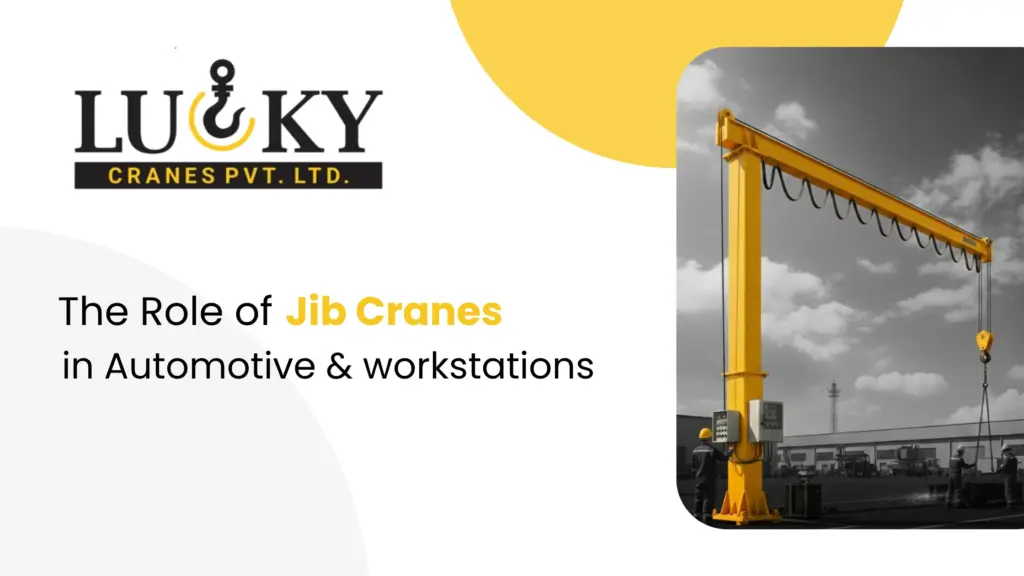
If you’ve ever walked through an automotive plant, you’ve probably noticed those rotating arm-like structures mounted on walls or pillars near workstations. Those are jib cranes, and honestly, they do a lot more heavy lifting (literally) than most people give them credit for. In fast-moving manufacturing environments where every second counts, jib cranes have quietly become one of the most relied-upon tools on the shop floor. They are not flashy, but they’re incredibly effective. What is a Jib Crane? Simply put, a jib crane is a lifting device with a horizontal arm – called a “jib” or boom – that sticks out from a vertical mast or wall mount. The arm can rotate (anywhere from 180° to 360°), and a hoist runs along it to lift and move heavy loads within a specific work zone. Think of it as a dedicated crane for a single workstation. Instead of calling in a big overhead crane every time you need to lift something, the jib crane is right there, ready to go. That kind of immediacy makes a huge difference on a busy assembly line. Types of Jib Cranes Used in Automotive Plants Not all jib cranes are the same. Depending on where you need them and what you’re lifting, you’d pick between wall-mounted cranes (great for perimeter stations), floor-mounted pillar cranes (perfect for central work islands with full 360° rotation), articulating cranes (for tight or cluttered spaces), or mast-type cranes (for high-bay areas with heavy loads). We’ll dig into each of these in detail later on. Why Jib Cranes Are Essential in Assembly Lines Here’s the thing about assembly lines, they run on rhythm. The moment one station slows down, it affects every station after it. Jib cranes keep that rhythm going by making sure workers never have to wait for a lift or wrestle with a heavy component on their own. They’re always there, always ready, and built for exactly the kind of repetitive work that assembly lines demand. Importance of Jib Cranes in the Automotive Industry Let’s be honest – automotive manufacturing is intense. You’re moving thousands of heavy parts every single day, trying to hit production targets while keeping workers safe and quality high. That’s a tough balance to strike, and jib cranes play a bigger role in achieving it than most people realize. Enhancing Material Handling Efficiency Think about what it takes to move an engine block manually. It’s heavy, awkward, and slow, and if something goes wrong, it’s dangerous too. A jib crane changes that completely. One operator can lift, swing, and position that same engine block precisely and repeatedly, without breaking a sweat. That speed and consistency add up to serious productivity gains over the course of a shift. And because jib cranes can be fitted with custom attachments – vacuum grippers, magnetic lifters, ergonomic balancers – they can handle all kinds of irregularly shaped components that would otherwise take two or three people to move safely. Supporting Just-in-Time (JIT) Manufacturing JIT manufacturing is all about having exactly what you need, exactly when you need it. No excess, no waiting. For that to work, every component has to arrive at its station right on cue – and the moment it does, it needs to be lifted and installed immediately. Jib cranes make that possible. Since they’re fixed at each workstation, there’s no waiting for a shared crane to become available. The instant a part shows up, it can be lifted. That kind of responsiveness is exactly what JIT demands. Reducing Production Downtime Downtime is expensive. Whether it’s an equipment breakdown, a worker injury, or a bottleneck at one station, stoppages cost money fast. Jib cranes are mechanically simple, built to last, and easy to maintain. They rarely break down unexpectedly, and when they do need attention, servicing is straightforward. That reliability is worth a lot when your production line can’t afford to stop. Key Applications in Automotive & Assembly Units So where exactly do you find jib cranes in an automotive plant? Pretty much everywhere, actually. Here are the key areas where they really earn their keep. Engine Assembly Line Operations Engine assembly is one of the most precise and demanding jobs in any auto plant. You’re working with heavy blocks, delicate tolerances, and a sequence that has to be followed exactly right. Jib cranes here are fitted with precision hoists and positioning fixtures so technicians can lower engines onto mounts and install components with millimeter accuracy – no guesswork, no straining. In many plants, you’ll see a jib crane at virtually every station along the engine line, each one doing its specific job in the assembly sequence. It’s a well-choreographed operation, and the cranes are central to making it work. Loading & Unloading Heavy Components Receiving docks are busy, hectic places. Trucks are coming and going, components need to move fast, and you can’t afford accidents. Jib cranes at receiving bays let teams quickly unload heavy parts and transfer them to storage – without needing a forklift anywhere near pedestrians or delicate components. It’s safer, faster, and a lot less stressful. Welding and Fabrication Support Welding stations need components presented at exactly the right angle – and sometimes flipped partway through the job. That’s where articulating jib cranes shine. They can hold a component steady, rotate it as needed, and reposition it for the next weld run, all without the operator having to manhandle anything heavy. For robotic welding cells, jib cranes serve as the feeding mechanism that keeps the robot supplied without human intervention. Paint Shop Handling Solutions Freshly painted surfaces are fragile. One accidental bump and you’ve got a defect that needs to be reworked – which is costly and time-consuming. Jib cranes in the paint shop are configured with soft-grip attachments and vibration-dampening hoists to move panels and trim pieces gently, without any contact that could mar the finish. It’s a delicate job, and the right crane setup makes all the difference. Benefits of Using Jib Cranes in Assembly Units
A Detailed Guide to Winch Machines: Features, Load Capacity, and Industry Applications
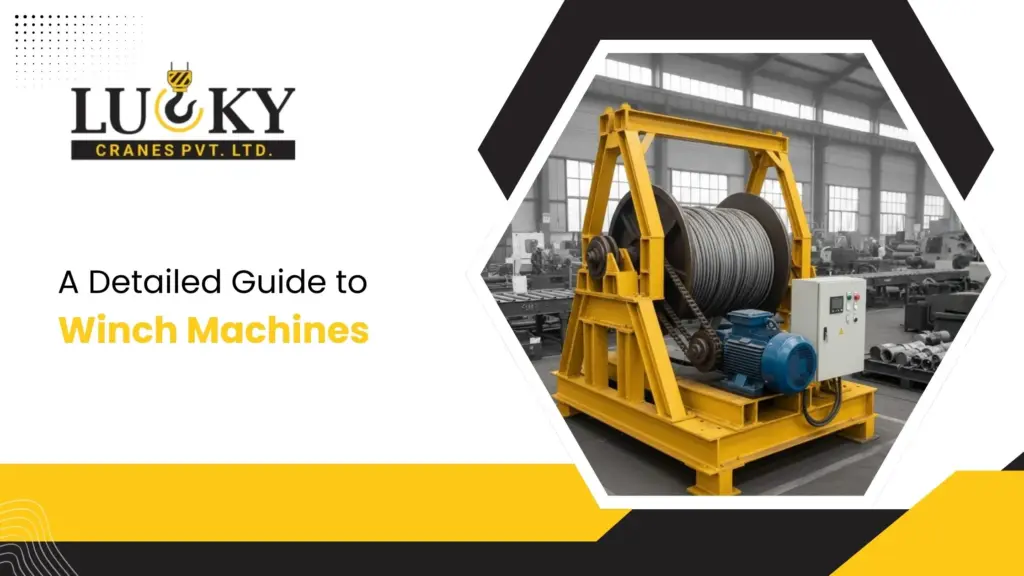
Winch machines are very important machines that are used in lifting and pulling operations in different industries. These machines are very useful in moving heavy materials, especially in construction sites, warehouses, and even in marine operations. It is very important that businesses have adequate knowledge about the features, capacity, and uses of winch machines in order to select the appropriate machine that suits their business operations. It is also important that businesses select an appropriate electric winch machine manufacturer. What Is a Winch Machine? A winch machine is a mechanical device that is employed to pull or lift a heavy load by means of a rope or a chain wound around a rotating drum. The drum is operated by a manual mechanism, a hydraulic system, or an electric motor. Amongst these options, electric winch machines are mostly preferred due to their efficiency, simplicity of operation, and accuracy of operation while handling heavy loads. Electric winches are mostly employed in industries where proper lifting is necessary. Key Features of Winch Machines Modern winch machines are designed with several advanced features to ensure smooth operation and safety. When selecting a winch, it is important to evaluate these key components. 1. High Performance Electric Motor The electric winch machine is fitted with high-performance motors that ensure consistent torque and pulling power. This ensures that the machine does not experience any interruptions while lifting heavy loads, especially during continuous operations. 2. Strong Drum and Cable System The drum is the central component of the winch machine where the wire rope is wrapped around it. High-quality winches are made up of strong steel wire ropes. 3. Reliable Braking System Safety is a major concern when lifting heavy materials. Most winch machines include automatic braking systems that prevent sudden load drops and provide better control during lifting or pulling operations. 4. Compact and Strong Design The design of industrial winch machines is compact and strong. This means that the machines can be used in tough environments such as building sites or on boats due to their durability. 5. Easy Operation and Control Electric winches use control systems that allow users to control the winches easily. Looking for a Reliable Electric Winch Machine Manufacturer? Lucky Crane Pvt Ltd provides durable and efficient winch machines designed to meet the needs of modern industries. Click Here Understanding Load Capacity Load capacity is one of the most significant factors that need to be taken into consideration while selecting a winch machine. Load capacity refers to the maximum weight that a winch is able to lift. It is of utmost importance that a winch with a lower load capacity is not used, as it may cause damage to the equipment. Winch machines are available in a variety of load capacities depending upon the industry and application. A small electric winch may be able to lift a few hundred kilograms, while a heavy-duty industrial winch may be able to lift a few tons. While selecting a winch machine, a few additional factors that need to be taken into consideration are: Cable length and thickness Motor power and speed Mounting configuration Duty cycle for continuous operation Industry Applications of Winch Machines Winch machines are widely used across multiple industries because of their versatility and efficiency. Manufacturing Facilities Manufacturing facilities require winches to move heavy components and machinery parts. This helps in the efficient flow of operations. Marine and Shipping Winches are required in the marine sector for pulling anchors and handling fishing gear. The winches are strong and can withstand harsh weather. Warehousing and Logistics Winches are required in the warehousing sector for the efficient handling of goods. They are required for the loading and unloading of goods. Conclusion Winch machines are powerful equipment that makes lifting and pulling heavy loads easier for various industries. Their robust design, safety, and lifting capacity make them a necessary tool for any industry. Understanding the capabilities of winch machines, their lifting capacities, and their uses will enable industries to make better decisions in selecting the right equipment for their needs. Working with a trusted and experienced electric winch machine supplier will provide industries with the best equipment for increased productivity, and companies like Lucky Crane Pvt.Ltd are helping industries with their trusted equipment.
What Is an EOT Crane? Definition, Types & Working Principle
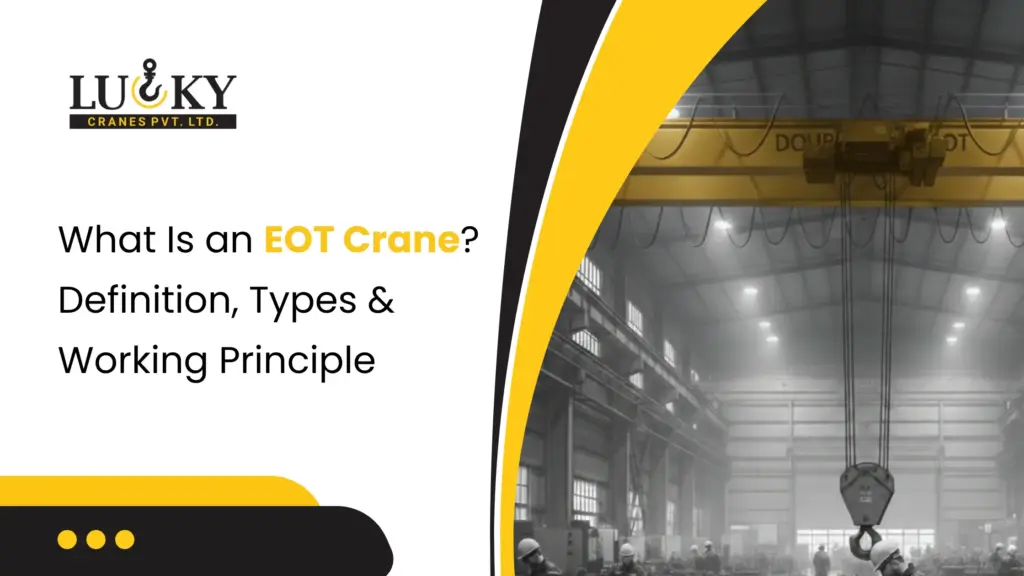
In contemporary industrial setups, heavy material handling is an important aspect that helps in ensuring productivity and safety. Among the globally used lifting devices in factories and warehouses is the EOT crane. If you are looking for a good eot crane supplier, having knowledge about the basics of EOT cranes, their definition, types, and working principle, can be of assistance to you. What Is an EOT Crane? An EOT crane is a kind of overhead crane that travels along a fixed runway system erected at a higher level within a factory. It is an electrically operated overhead crane that is used for lifting heavy loads from one place to another within a specific area. EOT cranes are generally used in factories, steel plants, warehouses, power houses, and construction companies where there is a need to lift heavy machinery, materials, and products. Main Components of an EOT Crane To understand how an EOT crane works, let’s look at its key components: 1. Bridge The bridge is the main horizontal beam that spans across the runway. It carries the trolley and hoist. 2. Hoist The hoist is responsible for lifting and lowering the load. It consists of a motor, drum, wire rope or chain, and hook. 3. Trolley The trolley moves along the bridge and carries the hoist, enabling lateral movement of the load. 4. Runway Rails These are fixed tracks installed on either side of the building structure on which the crane travels. 5. Control System The crane is operated using a pendant control, remote control, or cabin control system. Types of EOT Cranes When selecting an eot crane manufacturer, it is essential to know the different types of EOT cranes available. Single Girder EOT Crane Single girder cranes consist of one bridge girder that supports the trolley and hoist. They are suitable for light to medium-duty applications and are economical. Single girder cranes are used in small to medium-sized manufacturing plants. Double Girder EOT Crane Double girder cranes consist of two bridge girders, which provide greater lifting capacity and stability. They are suitable for heavy-duty industrial applications and can lift heavier loads to higher heights. Underslung EOT Crane In underslung cranes, the crane is suspended from the roof structure instead of running on top of the rails. They are useful in plants where there is limited headroom. Working Principle of an EOT Crane The working mechanism of an EOT crane is based on three-dimensional movements: Longitudinal Movement – The crane moves along the runway rails along the length of the building. Lateral Movement – The trolley moves along the bridge girder. Vertical Movement – The hoist lifts and lowers the load. All three movements are synchronized to enable the crane to transport heavy materials from one point to another accurately and safely. The electric motors used to power all movements ensure smooth operation. Applications of EOT Cranes EOT cranes are widely used in: Steel and metal industries Automobile manufacturing units Cement plants Warehouses and logistics centers Power plants They help reduce manual labor, increase productivity, and improve workplace safety. Why Choosing the Right Manufacturer Matters Selecting a trusted eot crane manufacturer ensures better build quality, safety compliance, longevity, and after-sales support. A well-designed EOT crane improves operational productivity and reduces downtime in industrial environments. Conclusion An EOT crane is a necessary material handling system used in various industries for the efficient lifting and transportation of heavy loads. There are many types of EOT cranes available in the market, including single girder, double girder, and underslung cranes. By knowing the details of the system and its working, you will be able to make a better investment decision. For a long-lasting, safe, and efficient lifting system, Lucky Crane Pvt.Ltd provides reliable crane solutions to meet the demands of the modern industrial sector.
5 Industrial Crane Types Used in Modern Factories
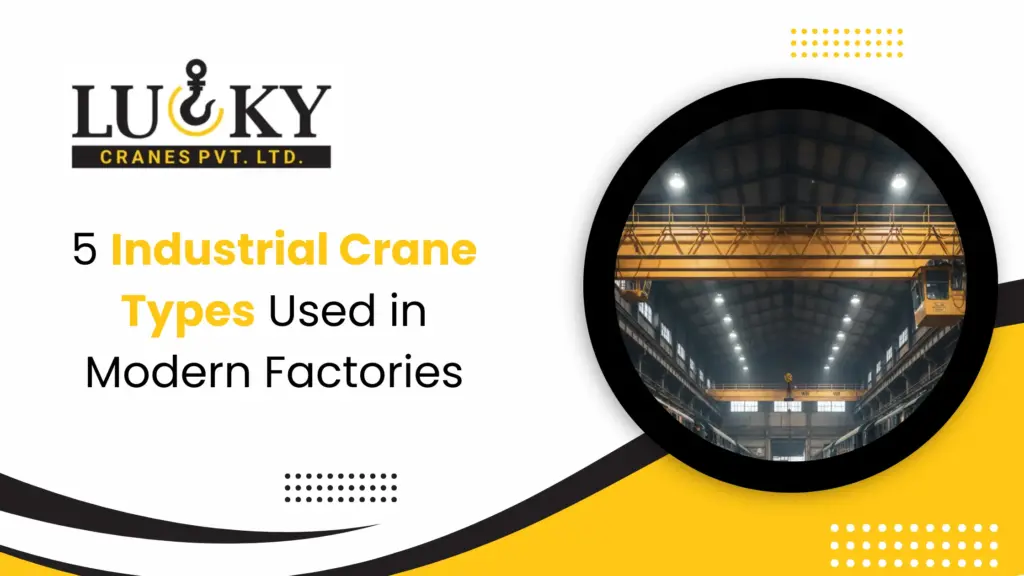
Modern factories heavily depend on the use of cranes for lifting and moving heavy loads safely and efficiently. Cranes are widely used in small workshops and manufacturing plants to enhance productivity and promote a safe working environment. However, it is essential to select a suitable type of crane as a function of capacity, working space, and operations needed. The following are five major crane types widely used in modern factories. 1. Overhead Crane Ideal for Heavy Duty Lifting An overhead crane is one of the most commonly used lifting solutions in factory and industrial environments. Installed on runway beams mounted on building structures, these cranes allow smooth horizontal and vertical movement of loads across the shop floor. They are specifically designed for handling heavy materials, large machine components, and bulk loads. Since overhead cranes operate above the working area, they help maximize floor space, making them an ideal choice for high-production facilities that require efficient material handling without obstructing operations. Applications Handling heavy machinery parts in manufacturing units Lifting and transferring raw materials and finished goods Supporting assembly lines in high-volume production plants Key Advantages Efficient use of floor space by utilizing overhead movement High load capacity suitable for heavy-duty operations Improves productivity and workplace safety Price Range (India) The price of an overhead crane depends on capacity, span, lift height, controls, and customization: ₹5,00,000 – ₹10,00,000 – Light to medium-duty cranes (up to ~10 T capacity) ₹10,00,000 – ₹25,00,000 – Medium to heavy-duty cranes (~10 T to 25 T capacity) ₹25,00,000 and above – Heavy or specialized cranes (above 25 T or custom specifications) 2. Jib Crane Perfect for Localized Workstations A jib crane is a compact and highly efficient lifting solution designed for localized workstations. It features a rotating horizontal arm that allows loads to be lifted, moved, and positioned within a limited radius. Jib cranes are commonly used in assembly lines, loading bays, and individual work areas where precise material handling is required. Due to their simple design and ease of installation, jib cranes offer a cost-effective option for businesses that need reliable lifting support in confined or dedicated spaces. Applications Assembly and workstation material handling Loading and unloading operations Maintenance and repair activities Key Advantages Ideal for confined and localized work areas Smooth and precise load positioning Cost-effective with low maintenance requirements Price Range (India) The cost of a jib crane varies based on capacity, mounting type (pillar or wall-mounted), and rotation angle: ₹1,50,000 – ₹4,00,000 – Light-duty jib cranes (up to ~2 T capacity) ₹4,00,000 – ₹8,00,000 – Medium-duty jib cranes (~2 T to 5 T capacity) ₹8,00,000 and above – Heavy-duty or customized jib cranes 3. Gantry Crane Flexible and Portable Lifting Solution A gantry crane is a flexible and portable lifting solution supported by legs that travel on wheels or rails. Unlike overhead cranes, gantry cranes do not require permanent building support structures, making them ideal for facilities that need adaptable lifting systems. These cranes can be used both indoors and outdoors and are widely preferred in environments where mobility, quick installation, and operational flexibility are essential. Applications Material handling in fabrication and welding shops Loading and unloading in warehouses and yards Heavy lifting operations in shipyards and outdoor work areas Key Advantages Does not require building-mounted runway beams Suitable for both indoor and outdoor operations High mobility and easy relocation Price Range (India) The cost of a gantry crane depends on span, mobility type, and load capacity: ₹3,00,000 – ₹8,00,000 – Light-duty gantry cranes (up to ~5 T capacity) ₹8,00,000 – ₹20,00,000 – Medium to heavy-duty gantry cranes (~5 T to 20 T capacity) ₹20,00,000 and above – Heavy-duty or customized gantry cranes 4. Electric Wire Rope Hoist Crane High-Speed and Smooth Operations An electric wire rope hoist crane is designed for high-speed and smooth lifting operations, making it ideal for production-driven industrial environments. These cranes are widely used in manufacturing facilities where frequent and repetitive lifting is required. Known for their precise load control, smooth operation, and easy maintenance, electric wire rope hoist cranes help improve workflow efficiency while ensuring consistent performance over long operational cycles. Applications Repetitive lifting in production and assembly units Handling heavy components in manufacturing plants Material movement in workshops and industrial facilities Key Advantages High lifting speed with smooth and controlled operation Reliable performance for continuous and repetitive use Long service life with low maintenance requirements Price Range (India) Pricing varies based on lifting capacity, duty class, and lifting height: ₹2,50,000 – ₹6,00,000 – Light-duty wire rope hoists (up to ~5 T capacity) ₹6,00,000 – ₹15,00,000 – Medium-duty hoists (~5 T to 15 T capacity) ₹15,00,000 and above – Heavy-duty or customized wire rope hoist crane systems 5. EOT Crane: Electric Overhead Traveling Crane Advanced Solution for Large Factories An EOT crane is an advanced lifting solution widely used in large factories and heavy industrial environments. These cranes are designed to handle higher lifting capacities and are equipped with advanced control systems for precise and safe operations. Commonly found in steel plants, automotive manufacturing units, and heavy engineering facilities, EOT cranes enable smooth material movement across wide spans, significantly reducing manual effort and improving overall workflow efficiency. Applications Heavy material handling in steel and metal industries Assembly and transportation of large automotive components Lifting operations in heavy engineering and manufacturing plants Key Advantages High load capacity suitable for heavy-duty applications Advanced control options for precise and safe operations Efficient movement of materials across large spans Price Range (India) The cost of an EOT crane depends on capacity, span, duty classification, and automation level: ₹10,00,000 – ₹25,00,000 – Medium-duty EOT cranes (up to ~10 T capacity) ₹25,00,000 – ₹60,00,000 – Heavy-duty EOT cranes (~10 T to 50 T capacity) ₹60,00,000 and above – High-capacity or fully customized EOT crane systems Why Choosing the Right Industrial Crane Manufacturer Matters The selection of the appropriate industrial crane manufacturer is considered a critical factor because it entails not just the quality of the crane but also the design and
Future of EOT Cranes in Industry 4.0
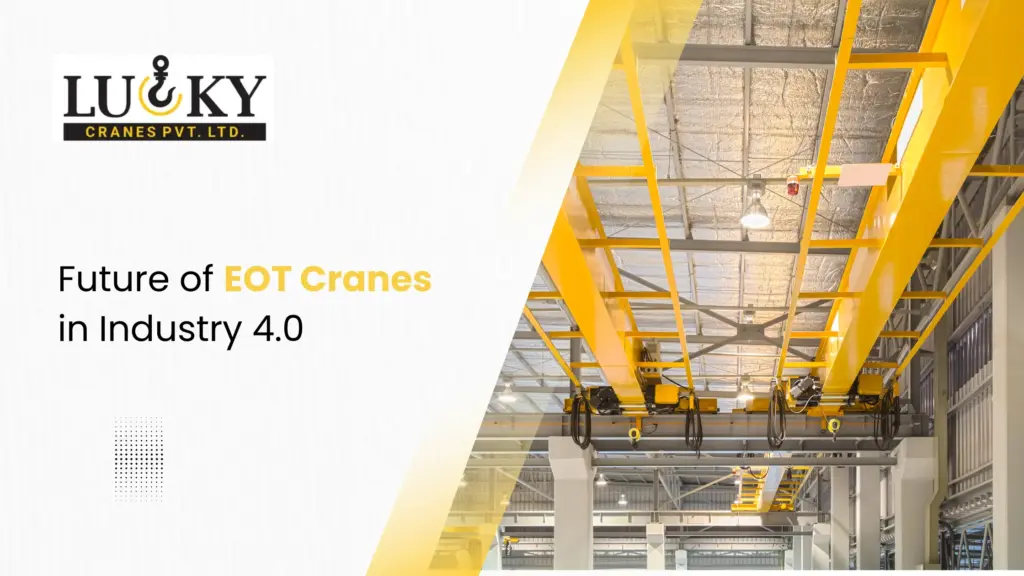
The world of manufacturing is changing quickly in response to the development of Industry 4.0. Smart factories, automation, IoT technologies, and real-time monitoring of data are changing the operational characteristics of industries across the world. Among various technologies, the Electric Overhead Traveling (EOT) cranes are making significant impacts in this changing world. The future of EOT cranes involves smart technology, automated technology, and efficient technology. As businesses modernize their respective industries, partnering with a trusted eot crane manufacturer & Supplier is essential to acquire modern products. Understanding Industry 4.0 in Material Handling Industry 4.0 refers to the integration of digital technologies such as artificial intelligence (AI), Internet of Things (IoT), cloud computing, and automation into industrial processes. In material handling, this means smarter cranes capable of communicating, analyzing data, and operating with minimal human intervention. EOT cranes are no longer just lifting equipment,they are becoming intelligent systems integrated into connected production environments. Smart EOT Cranes: The Next Generation IoT-Enabled Monitoring Systems Modern EOT cranes are now equipped with IoT sensors that continuously monitor load weight, operating hours, vibration levels, and motor temperature. These sensors transmit real-time data to centralized control systems, allowing managers to track performance and identify potential issues before failures occur. This smart monitoring reduces downtime and increases overall operational reliability. Predictive Maintenance Technology Predictive maintenance is one of the biggest advancements in Industry 4.0. Instead of waiting for equipment failure, data analytics helps detect wear and tear early. Smart EOT cranes can alert operators about component fatigue, misalignment, or lubrication needs. Working with an experienced eot crane manufacturer & Supplier ensures access to advanced crane systems designed with predictive maintenance capabilities. Automation and Remote Operation Reduced Human Intervention Automation is changing the way cranes operate. For instance, it’s now possible to program EOT crane operations for recurring lifts. This is achieved by automating the position of loads, which requires little human intervention. Remote and Wireless Control Industry 4.0 has enabled wireless and remote crane operations. This means that a crane operator can operate the crane from a safe distance through a remote panel or digital interface. This has reduced the number of accidents during working operations. Enhanced Safety Features in Smart EOT Cranes Advanced Load Control Systems Features of future-ready EOT cranes include the incorporation of anti-sway technology and overload protection systems. Such equipment ensures proper and smooth lifting operations without the incidence of instability. Collision Avoidance Technology In large industrial plants, several cranes are used at the same time, and collision detectors are employed to avoid accidents. The detectors will alert the crane to slow down and avoid collision with other objects. Energy Efficiency and Sustainability Energy-Optimized The modern EOT cranes used today have inbuilt energy-efficient motors, as well as other features, such as variable frequency drives (VFD). Regenerative Braking Systems Some advanced cranes nowadays even come equipped with regenerative braking technology, which reutilizes the energy normally wasted while braking. This innovation is good for the environment. Integration With Smart Factory Systems Data Connectivity With ERP and MES EOT cranes in Industry 4.0 can integrate with Enterprise Resource Planning (ERP) and Manufacturing Execution Systems (MES). This allows seamless coordination between production planning and material movement. Improved Workflow Optimization By analyzing crane performance data, factories can optimize workflow, reduce bottlenecks, and improve overall productivity. The Road Ahead for EOT Cranes The future of new cranes is all about intelligence, automation, and sustainability. As the factories move to adapt digital transformation strategies, the role of the crane will include intelligent systems beyond the physical mandate of lifting the loads. Selecting the best eot crane manufacturer & Supplier is critical to being competitive in such a changing industrial world. Conclusion Industry 4.0 is completely changing material handling systems, and EOT cranes are leading this change. With IoT implementation, predictive maintenance, automation, and efficiency, EOT cranes of the future will be safer and more intelligent. By adopting new technologies and embracing innovative engineering, Lucky Crane Pvt. Ltd continues to support the industry with new, modern crane technologies designed for the factories of the future.
How to Choose the Right Industrial Crane for Your Factory or Warehouse
Choosing the appropriate crane system is an important decision in any factory or warehouse scenario. A well-chosen crane not only helps to improve productivity and ensure work safety but also minimizes downtime. Although there are several types of industrial cranes, the selection of the most appropriate one is a daunting task. An effective way to meet all your crane needs is to select a trusted industrial crane manufacturer. Understanding Your Lifting Requirements It is important, before deciding which kind of crane to buy, to determine your facility’s necessities. Evaluate Load Capacity The first aspect to take into consideration is the maximum weight which you would need to lift with the crane. This is important as cranes are made to be used with different weights, and it is vital to avoid overloading the crane as it may impair safety and result in damage to the crane. Determining the Span and Coverage Area The width and length of the space in your factory or warehouse need to be determined. The span of the crane and lifting height need to match the dimensions of the space in order for the material movement to take place in an unhindered manner. Identify Frequency of Use Will it operate during the course of the entire day, or only at times? For frequent operations, heavy-duty crane systems are employed, which can withstand frequent operations due to heavy-duty components and powerful motor systems. Types of Industrial Cranes to Consider Overhead Cranes The overhead crane has beams that sit on the ceiling. They are best used in large plants where floorspace is a necessary consideration. The overhead crane covers the entire area as intended, making it suitable for lifting heavy loads. Gantry Cranes Gantry cranes operate with the support of their legs, which move along rails or wheels installed on the ground floor. Gantry cranes are used both indoors and outdoors and are considered versatile when permanent support structures are not present. Jib Cranes Jib cranes are generally compact and are meant to handle localized lifting. They can be used in situations that involve assembly operations because they are ideal for such conditions. Choosing the correct crane type depends on your space constraints, load requirements, and operational workflow. Safety and Compliance Considerations Structural Integrity Ensure your building structure can support the selected crane system. An experienced industrial crane manufacturer will conduct structural assessments before installation. Safety Features Modern cranes come equipped with advanced safety features such as overload protection, emergency stop systems, limit switches, and anti-collision devices. These features are critical for preventing workplace accidents. Operator Training Even the best crane system requires trained operators. Investing in proper training ensures safe and efficient usage. Consider Customization Options for Crane Every factory layout is unique. Customization plays a vital role in achieving optimal performance. Custom Span and Height Adjustments Tailored crane dimensions ensure seamless integration into your facility without disrupting workflow. Specialized Hoisting Systems Different applications may require electric chain hoists, wire rope hoists, or heavy-duty lifting mechanisms. Choosing the right hoisting system enhances performance and longevity. Maintenance and Long-Term Support Service Availability Certain companies provide better service and support than others, particularly when it comes to post-purchase service and replacement parts. Regular maintenance not only serves to increase the lifespan of the crane but also to reduce downtime. Energy Efficiency Modern crane systems are equipped with power-efficient technology to minimize cost in the long run. Industrial Crane: Budget Vs Long-Term Value While the cost is a consideration, buying just on the basis of initial pricing can be very risky. Buying quality equipment from a good industrial crane manufacturer allows for longevity and safety, as well as better return on investment in the long run. Conclusion Ensuring that the appropriate type of industrial crane is used within a company can be achieved by carefully evaluating the needs for capacity, space, and operational efficiency. Such considerations ensure that a company is able to improve productivity and safety levels within an industrial environment. Through the effective provision of engineering and expert services, Lucky Cranes Pvt. Ltd is able to deliver advanced industrial crane services to fulfill modern industrial needs.
Which Industries Commonly Use Goods Lifts?
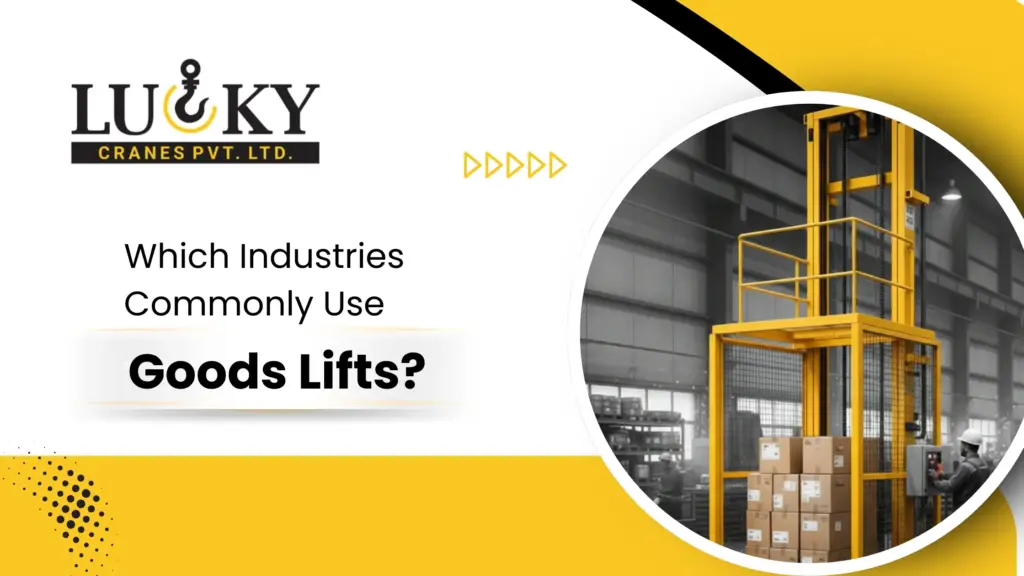
Efficiency in the management of materials is quite critical in today’s busy industrial and commercial environment. Among the most reliable means of handling materials vertically from one floor to another is the installation of a goods lift. It is meant to transport materials as opposed to persons. Its installation improves efficiency, safety, and operational workflow for firms that value having their needs met by a reliable goods lift manufacturer. Let’s look into the industries that commonly make use of goods lifts and understand the importance attached to them. What Is a Goods Lift? Goods lifting refers to a type of vertical lifting equipment used in moving raw materials, products, equipment, and inventories between different floor levels in a factory. Goods lifts are designed to lift heavy loads, making them an important piece of equipment in any industry. Industries That Commonly Use Goods Lifts Manufacturing Industry The manufacturing industry ranks among the largest users of goods lifts. Why Manufacturing Units Need Goods Lifts Safe Movement of Raw Materials and Components Transportation of finished goods between floors Reduced manual handling and labor fatigue Goods lifts are beneficial as they simplify production processes and reduce downtime. Warehousing and Logistics Industry Warehouses require vertical transportation systems extensively. Key Applications in Warehousing Moving pallets and cartons from storage levels Supporting fast inventory management Improving Space Utilization in Multi-Level Warehouses An efficient goods lift manufacturing company must offer high load capacities and smooth operations for logistics facilities. Retail and Shopping Malls Large retail stores and malls also benefit from goods lifts. Common Uses Transporting stock from storage areas to display floors Handling bulk inventory during restocking Supporting back-of-house operations Goods lifts help maintain smooth retail operations without disrupting customer movement. Construction Industry Construction sites frequently use goods lifts during building projects. Why Goods Lifts Are Essential in Construction Vertical movement of construction materials Safe lifting of tools and equipment Improved efficiency in high-rise projects They reduce reliance on manual lifting and improve site safety. Food Processing and Cold Storage Industry Food and beverage facilities require hygienic and efficient handling solutions. Industry-Specific Benefits Transport of packaged food products Movement of raw materials in processing units Efficient handling in cold storage environments Goods lifts designed for this sector focus on cleanliness,longevity, and temperature resistance. Pharmaceutical and Chemical Industry These industries demand precision and safety. Applications Handling sensitive materials Transporting Drums and Containers Supporting multi-floor production setups Goods lifts assist in the maintenance of controlled conditions by preventing contamination. Why Choosing the Right Goods Lift Manufacturer Matters A well-designed goods lift not only enhances the safety, minimizes operation costs, and ensures longevity of goods lifts, but it also improves all aspects of operation. For example, capacity, lifting rate, and individual requirements, etc., are to be taken into consideration when choosing a goods lift manufacturer. Conclusion Goods lifts are used extensively in many industries like manufacturing, warehousing, retail, construction, food processing, pharmaceuticals, etc. Goods lifts help to add efficiency, safety, and the smooth vertical transportation of materials. Working with an accomplished goods lift manufacturer like Lucky Cranes Pvt. Ltd. is beneficial to businesses.