
Selecting the right crane could influence productivity, efficiency, and safety significantly. No matter whether you build a new facility or upgrade the existing material handling systems, the decision that the vast majority of businesses frequently need to make is choosing between EOT cranes and gantry cranes.
Both crane types are popular within various manufacturing facilities, logistics centers, construction sites, fabrication workshops, warehouses, and many other places where lifting systems are required. Nevertheless, they are intended for different purposes and working conditions. The comparison of them could provide useful information about what type of cranes to select.
The following overview would be helpful if you want to find out the differences between EOT cranes and gantry cranes while analyzing the lifting systems produced by an Ahmedabad crane manufacturer.
Understanding the Basics of Industrial Cranes
Prior to conducting a comparison between the two systems, it is necessary to clarify their basic purposes. Industrial cranes are indispensable lifting devices that are intended for the safe transportation and placement of loads. These devices decrease manual labor, enhance safety within work places, and make it easier to manipulate materials.
There are numerous kinds of cranes available on the market. However, EOT cranes and gantry cranes are among the most popular industrial cranes.
What Is an EOT Crane?
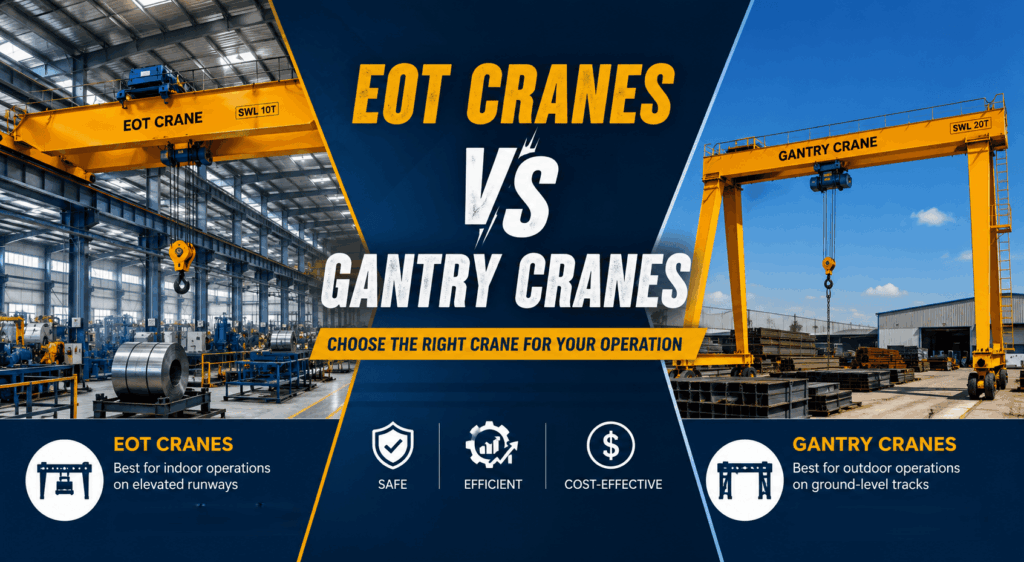
An EOT crane, also known as an Electric Overhead Traveling crane, operates on elevated runway beams installed inside a building. The crane moves along overhead tracks while the hoist travels across the bridge, allowing loads to be lifted and moved throughout the facility.
An experienced EOT crane manufacturer India designs these systems to maximize floor space while providing efficient material movement across production areas.
Because the crane operates above the workspace, it keeps the ground clear for workers, machinery, and production activities.
Where Are EOT Cranes Commonly Used?
EOT cranes are commonly found in manufacturing plants, steel processing units, engineering workshops, automotive facilities, warehouses, and assembly operations.
Businesses that require frequent lifting and repetitive material movement often prefer overhead crane systems because they provide excellent coverage and operational efficiency.
What Is a Gantry Crane?
A gantry crane performs a similar lifting function but differs significantly in its structural design. Instead of being supported by building-mounted runway beams, a gantry crane uses legs that run on rails or wheels positioned at ground level.
A professional gantry crane supplier typically recommends these systems when overhead runway structures are unavailable or when operations take place outdoors.
Gantry cranes are highly versatile and can be used in shipyards, construction sites, storage yards, railway facilities, and large fabrication areas.
Why Are Gantry Cranes Popular?
One of the biggest advantages of a gantry crane is its independence from building infrastructure. Since it supports itself through its leg structure, businesses can install it without major modifications to existing buildings.
This flexibility makes gantry cranes attractive for outdoor operations and facilities where structural support for overhead crane systems may not be practical.
What Are the Main Differences Between EOT Cranes and Gantry Cranes?
Structural Design
The most noticeable difference between these crane types is how they are supported. EOT cranes rely on elevated runway beams attached to the building structure. This design allows the crane to operate entirely above the workspace.
Gantry cranes, on the other hand, are supported by vertical legs that move along ground-level rails or wheels. When working with a crane manufacturer in Ahmedabad, understanding this structural distinction is often the first step in selecting the right crane.
Space Utilization
Space efficiency is a critical consideration for most businesses. EOT cranes maximize floor space because all lifting operations occur overhead. This allows forklifts, workers, and production equipment to move freely below the crane.
Gantry cranes occupy some floor space due to their support legs. While this may not be an issue in open outdoor environments, it can affect workflow in confined facilities.
For businesses looking to optimize indoor operations, many industrial crane manufacturers recommend overhead solutions.
Installation Requirements
Installation requirements vary significantly between the two systems. EOT cranes require runway beams, structural supports, and building integration. While this results in excellent operational efficiency, the installation process can be more complex.
Gantry cranes generally require less structural modification because they are self-supporting. A qualified gantry crane supplier can often install these systems more quickly, particularly in outdoor environments. The choice largely depends on the facility’s infrastructure and available installation budget.
Which Crane Offers Better Lifting Capacity?
Both crane types are available in a wide range of capacities. A reputable EOT crane manufacturer can design systems capable of lifting anything from a few tons to hundreds of tons, depending on operational requirements.
Similarly, gantry cranes can be engineered for heavy-duty lifting applications. Large gantry cranes are commonly used in shipbuilding, steel yards, and infrastructure projects where massive loads must be handled safely. The actual lifting capacity depends more on engineering specifications than the crane type itself.
How Do EOT Cranes Improve Productivity?
Continuous Material Flow
One of the biggest advantages of overhead crane systems is their ability to support continuous production processes.
Since the crane operates above the work area, materials can be transported efficiently between workstations without interfering with other activities. This helps reduce bottlenecks and improve workflow.
Manufacturing facilities often rely on EOT cranes to streamline production and maintain consistent output levels.
Enhanced Workplace Safety
EOT cranes help create a safer work environment by reducing manual handling and minimizing the need for ground-based lifting equipment.
Leading industrial crane manufacturers incorporate advanced safety features such as overload protection, anti-collision systems, emergency stop controls, and variable speed drives to further enhance workplace safety.
When Is a Gantry Crane the Better Choice?
Outdoor Applications
A gantry crane is often the preferred option when lifting operations take place outdoors. Construction sites, container yards, storage facilities, and shipyards frequently utilize gantry systems because they do not depend on building structures.
An experienced gantry crane supplier can customize the crane to handle varying environmental conditions while maintaining reliable performance.
Temporary or Flexible Operations
Businesses requiring temporary lifting solutions may also benefit from gantry cranes. Portable and semi-portable models can be relocated as operational needs change. This flexibility makes them suitable for projects where permanent overhead infrastructure is not practical.
What Factors Should Influence Your Crane Selection?
Understanding Your Operational Requirements
A successful crane selection guide always begins with understanding your workflow. Questions to consider include:
- What materials will be lifted?
- How often will lifting operations occur?
- Will the crane operate indoors or outdoors?
- What lifting capacity is required?
- Is future expansion expected?
The answers help determine whether an EOT crane or gantry crane is the better fit.
Evaluating Facility Infrastructure
Facility design plays a major role in crane selection. If the building can support runway beams, overhead crane systems often provide greater efficiency. If structural modifications are difficult or expensive, a gantry crane may offer a more practical solution.
A trusted crane manufacturer in Ahmedabad can perform a site assessment and recommend the most suitable configuration.
Why Work with Experienced Industrial Crane Manufacturers?
Selecting the right equipment is only part of the process. Experienced industrial crane manufacturers provide valuable engineering expertise, helping businesses choose the most effective lifting solution based on their operational requirements.
They can also customize crane specifications, recommend safety enhancements, and provide installation and maintenance support throughout the crane’s lifecycle. Working with a reputable manufacturer ensures that your investment delivers long-term value and reliable performance.
Conclusion
Both EOT cranes and gantry cranes are highly effective lifting solutions, but each serves a different purpose. EOT cranes excel in indoor environments where maximizing floor space and supporting continuous production are priorities. Gantry cranes offer flexibility, self-supporting structures, and excellent performance in outdoor applications.
The right choice depends on your facility layout, lifting requirements, budget, and operational objectives. By working closely with an experienced crane manufacturer in Ahmedabad, businesses can evaluate their needs, compare available options, and select the crane system that delivers the best combination of efficiency, safety, and long-term performance. Understanding the strengths of each solution is the first step toward making a confident and informed investment in modern material handling equipment.