
Why Businesses Choose Electric Wire Rope Hoists for Heavy Lifting
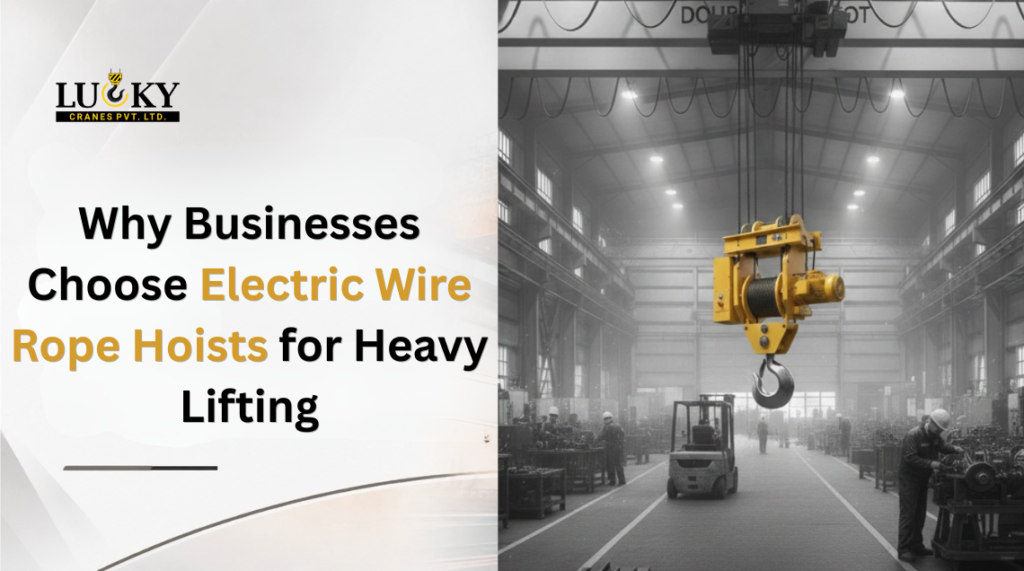
Heavy material handling is an essential part of many industrial operations. Manufacturing plants, steel industries, warehouses, automotive facilities, and engineering workshops regularly need to lift and move heavy loads safely and efficiently. For such demanding applications, electric wire rope hoists have become a preferred lifting solution because they offer high load capacity, smooth operation, precise control, and reliable performance. 1. Designed for Heavy-Duty Lifting One of the biggest reasons businesses choose electric wire rope hoists is their ability to handle heavy loads. Unlike conventional manual lifting equipment, wire rope hoists are designed for frequent and demanding lifting operations. Their robust construction makes them suitable for industrial environments where heavy materials need to be moved repeatedly. 2. Smooth and Controlled Operation Precision is important when lifting expensive machinery, raw materials, or heavy components. Electric wire rope hoists provide smooth lifting and controlled load positioning, helping operators move materials accurately. This reduces unnecessary load movement and supports safer material handling. 3. Higher Productivity Manual lifting requires significant physical effort and can slow down industrial processes. Electric wire rope hoists reduce manual handling and allow operators to lift and position heavy materials more efficiently. Faster and more consistent lifting can help businesses improve workflow and overall productivity. 4. Improved Safety Safety is a major consideration when handling heavy loads. Electric wire rope hoists provide controlled lifting and lowering, reducing the physical risks associated with manual material handling. When correctly installed, operated, and maintained, they can support safer industrial lifting operations. 5. Long Service Life Businesses also prefer wire rope hoists because of their durable construction and suitability for repeated use. Quality components and proper maintenance can help extend equipment life while reducing unexpected breakdowns and operational downtime. 6. Flexible Industrial Applications Electric wire rope hoists can be integrated with different crane and lifting systems, including EOT cranes, goliath cranes, and monorail systems. Their versatility makes them suitable for manufacturing, steel and metal processing, warehousing, logistics, automotive, and engineering applications. 7. Customizable to Business Requirements Every industrial facility has different lifting requirements. Electric wire rope hoists can be selected or customized according to factors such as load capacity, lifting height, operating conditions, and application needs. This allows businesses to choose a lifting solution that matches their specific operations. Conclusion For businesses dealing with frequent and heavy lifting, an electric wire rope hoist can provide an effective combination of strength, safety, precision, and productivity. With high load capacity, smooth operation, durable construction, and flexible installation options, these hoists are a valuable addition to modern industrial material handling systems. Choosing a reliable wire rope hoist manufacturer also ensures proper equipment selection, installation, servicing, and long-term support.
Why Industries are Upgrading to Advanced EOT Crane Systems
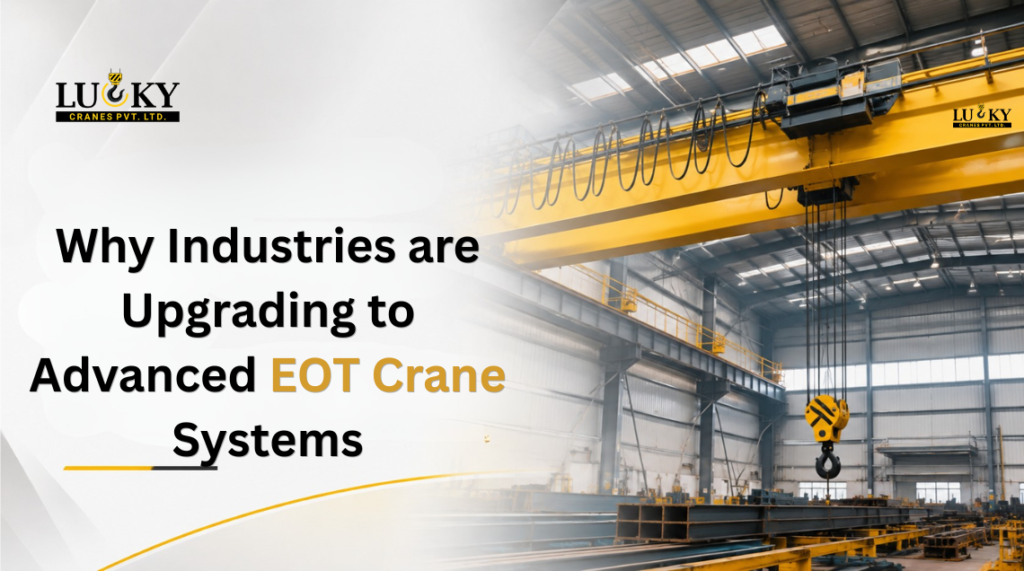
Modern industries are continuously looking for smarter and more efficient ways to handle heavy materials. This is one of the key reasons why businesses are upgrading from conventional lifting equipment to advanced EOT crane systems. Designed for safe, precise, and efficient material movement, EOT cranes are becoming an essential part of modern manufacturing and industrial operations. 1. Improved Material Handling Efficiency Advanced EOT cranes allow industries to lift, transport, and position heavy loads smoothly across production areas. Their overhead movement helps optimize floor space while supporting faster material handling operations. This can improve workflow and reduce unnecessary movement within the facility. 2. Enhanced Workplace Safety Safety is a major priority when handling heavy materials. Modern EOT crane systems provide controlled lifting and movement, reducing dependence on manual handling. Features such as precise controls and overload protection can further support safer crane operations. 3. Higher Productivity Faster lifting and movement directly contribute to improved productivity. Advanced EOT cranes are suitable for repetitive material handling operations and can help industries maintain consistent performance during demanding production schedules. 4. Suitable for Different Industrial Requirements EOT cranes can be designed according to specific lifting capacity, span, lifting height, and application requirements. Single girder systems are generally suitable for light to medium-duty applications, while double girder EOT cranes are designed for heavier industrial requirements. 5. Long-Term Operational Value Modern crane systems are built with durable components and can provide reliable performance when properly maintained. Regular inspection and preventive maintenance can help reduce unexpected breakdowns, extend equipment life, and minimize operational downtime. Conclusion The shift toward advanced EOT crane systems is driven by the need for better safety, higher productivity, efficient material handling, and long-term reliability. For industries looking to modernize their lifting operations, selecting a customized EOT crane from an experienced manufacturer can provide a practical and dependable solution.
How Smart Jib Cranes Are Improving Manufacturing Efficiency
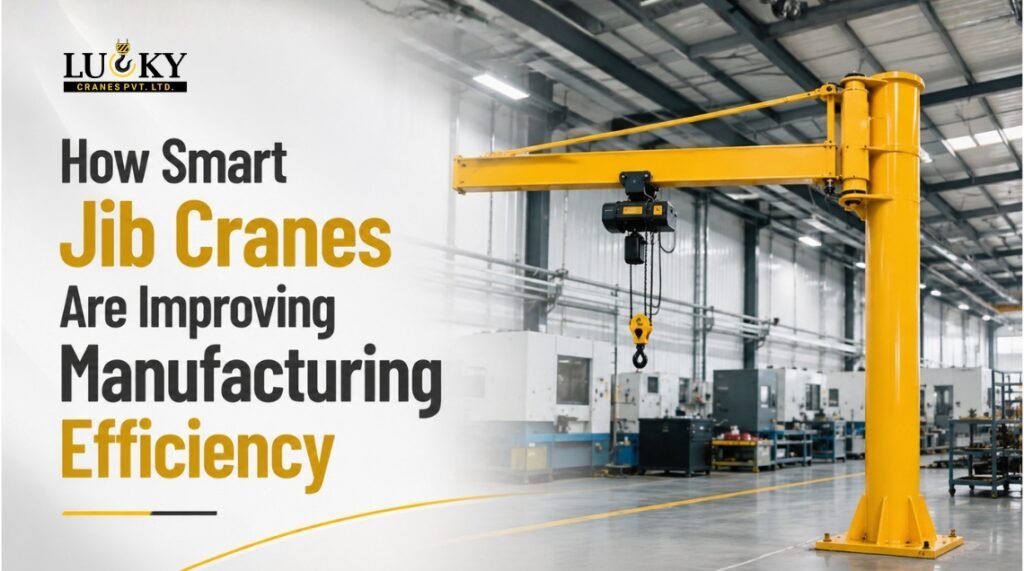
Modern manufacturing facilities are constantly looking for ways to improve productivity, reduce downtime, and create safer workplaces. Material handling plays an important role in achieving these goals. Among the various lifting solutions available today, smart jib cranes are becoming increasingly valuable for manufacturing and industrial operations. A jib crane provides localized lifting and material handling within a defined work area. Its compact design makes it suitable for workstations, assembly lines, workshops, and production units where fast and controlled load movement is required. What Makes a Jib Crane Smart? Traditional jib cranes are already effective for repetitive lifting operations. However, modern smart jib cranes can incorporate advanced controls, sensors, monitoring systems, and automation features to make operations more precise and efficient. These technologies can help operators control lifting and positioning more smoothly while providing useful information about crane usage and equipment performance. Smart features can also support preventive maintenance by helping identify unusual operating conditions before they lead to major problems. Improving Material Handling Efficiency In manufacturing, unnecessary movement and waiting time can affect overall production efficiency. A jib crane installed close to a workstation allows operators to lift, move, and position materials without depending on a larger shared crane. This can reduce material handling time and help maintain a consistent production workflow. For repetitive operations, having dedicated lifting equipment at the workstation can be particularly useful. Smart control systems can further improve positioning accuracy, helping workers handle components with greater control and reducing unnecessary movement during lifting operations. Supporting Workplace Safety Manual lifting and movement of heavy components can increase the risk of workplace injuries. Jib cranes reduce the need for workers to manually handle heavy loads by providing controlled mechanical lifting. Modern safety features such as overload protection, limit switches, emergency-stop systems, and other control technologies can further support safer crane operation. By combining proper equipment design with trained operators and regular maintenance, manufacturers can create a safer and more efficient material-handling environment. Saving Valuable Factory Space Space is an important consideration in modern manufacturing facilities. Jib cranes are designed for localized lifting and require comparatively limited operating space. Wall-mounted configurations can be especially useful where floor space is restricted, while floor-mounted systems can provide dedicated lifting coverage around specific workstations. This makes jib cranes a practical choice for facilities where installing a large overhead crane system may not be necessary for every area. Enabling Smarter Manufacturing As manufacturers move toward Industry 4.0, connected equipment and data-driven operations are becoming increasingly important. Smart lifting systems can potentially be integrated with monitoring and production systems to provide information about operating hours, load cycles, equipment usage, and maintenance requirements. Such data can help maintenance teams plan servicing more effectively and reduce the possibility of unexpected equipment downtime. Applications Across Manufacturing Industries Smart jib cranes can support a wide range of applications, including assembly operations, machine loading and unloading, fabrication, maintenance, workshops, automotive production, and warehouse activities. Their ability to provide controlled lifting within a specific work zone makes them suitable for both repetitive and specialized material-handling tasks. Conclusion Smart jib cranes are helping manufacturers improve the way materials are lifted, moved, and positioned on the shop floor. By combining compact design, controlled lifting, improved safety features, and modern monitoring capabilities, they can contribute to better productivity and more organized workflows. For manufacturers looking to optimize specific workstations without major infrastructure changes, a customized jib crane can be an effective material-handling solution. Selecting the right lifting capacity, mounting configuration, boom length, and control features ensures that the crane matches the facility’s operational requirements. Lucky Cranes provides customized jib crane solutions designed for different industrial applications and lifting requirements.
How Electric Wire Rope Hoists Enhance Workplace Safety
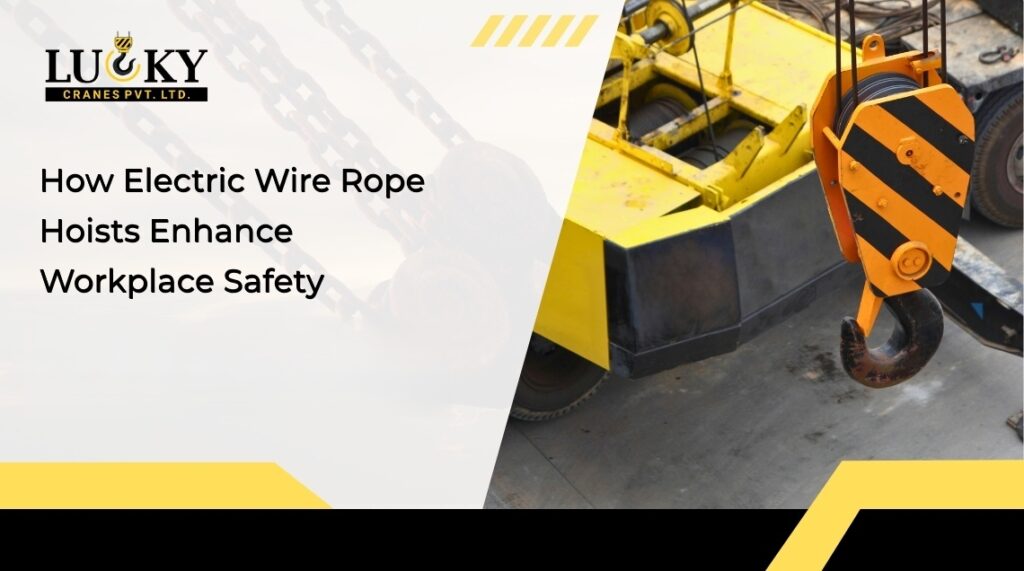
Ensuring safety at work is one of the major concerns in industries dealing with heavy objects. Manufacturing plants, warehouses, construction sites, engineering workshops, and logistics centers use lifting machinery to transport loads in a quick and efficient way. Despite the fact that cranes are usually considered the most important machinery, hoists are actually responsible for lifting the loads. It is vital to select the proper hoist. An electric wire rope hoist is one of the safest and most reliable lifting solutions available for industrial applications. Designed to lift heavy loads with precision, it reduces manual handling, minimizes workplace risks, and supports efficient material movement. However, not every hoist delivers the same level of performance. Working with an experienced electric wire rope hoist manufacturer ensures that businesses receive equipment built for durability, safety, and long-term reliability. This guide explains how electric wire rope hoists improve workplace safety, the features that make them dependable, and what businesses should consider when selecting the right lifting solution. What Is an Electric Wire Rope Hoist? The electric wire rope hoist is a type of lifting machine which employs an electrically driven winding of steel wire rope around a drum for the purpose of lifting the load. These hoists are usually found in overhead cranes, gantry cranes, monorail systems, among other industrial lifts. As compared to hand-operated hoists, the electric wire rope hoist is driven by an electric motor and thus enables users to lift heavy objects easily without the need of much effort. The hoist is extensively used in manufacturing plants, fabrication shops, warehousing, automobile industry, and steel making industries. A reliable electric wire rope hoist manufacturer produces such hoists that perform well consistently. Why Workplace Safety Depends on Reliable Lifting Equipment Lifting heavy materials always involves a level of risk. Improper handling, equipment failure, overloaded systems, or operator error can result in workplace accidents, damaged materials, and costly downtime. An electric wire rope hoist reduces many of these risks by providing controlled lifting, stable load movement, and advanced safety features. When paired with regular maintenance and proper operating procedures, it becomes an essential part of a safe material handling system. This is why businesses increasingly choose equipment from experienced wire rope hoist suppliers that focus on engineering quality and operational safety. How Does an Electric Wire Rope Hoist Improve Workplace Safety? Precise and Controlled Lifting One of the biggest advantages of an electric wire rope hoist is its ability to lift loads smoothly and accurately. Unlike manual lifting methods, electric hoists provide consistent speed and controlled movement, reducing sudden jerks that can destabilize heavy loads. This level of precision helps operators position materials safely and minimizes the chances of accidents during lifting operations. A reliable electric wire rope hoist manufacturer designs hoists with precision control systems that improve both safety and operational efficiency. Reducing Manual Handling Risks Manual lifting remains one of the leading causes of workplace injuries. Heavy materials place significant strain on workers, increasing the risk of back injuries, muscle fatigue, and repetitive stress. Electric wire rope hoists eliminate much of this physical effort by handling the lifting process automatically. Instead of manually moving heavy components, operators control the hoist using pendant controls or remote systems. This reduces physical strain while improving workplace ergonomics and overall safety. Built-In Safety Features Protect Workers Current electric wire rope hoists feature several safety mechanisms that ensure a safe operation. There are several wire rope hoists that have overload mechanisms, which do not permit hoisting of loads above the maximum permissible. Such systems increase safety for personnel and the equipment. Emergency stops allow the operator to instantly terminate the lifting process in case of any emergency. Limit switches automatically terminate the motion of the hoist at the set upper and lower limits of movement, thus ensuring safety from excessive motion of the equipment. Better Load Stability During Operation Maintaining load stability is critical during lifting operations. Electric wire rope hoists are designed to distribute lifting forces evenly across the wire rope and drum system. This reduces unwanted swinging and improves control while transporting heavy materials. Stable load movement lowers the risk of collisions with equipment, structures, or personnel, making the workplace safer for everyone involved. An experienced electric wire rope hoist manufacturer pays close attention to engineering design to ensure consistent lifting performance under varying load conditions. High-Strength Wire Rope Improves Reliability The wire rope itself plays a major role in lifting safety. Industrial-grade steel wire ropes are designed to withstand heavy loads, repeated lifting cycles, and demanding operating environments. High-quality wire ropes resist wear, fatigue, and stretching, helping maintain safe lifting performance over extended periods. Professional wire rope hoist suppliers carefully select wire ropes that meet required load capacities and safety factors for industrial applications. Consistent Performance Reduces Operational Risks Quality equipment is a guarantee of safety in the work environment. Malfunctioning of equipment during lifting can cause danger, particularly in case of handling large weights. Using equipment produced by a reliable manufacturer of electric wire rope hoists will minimize the risks of malfunctions thanks to improved technology. Smooth operation will provide workers with an opportunity to lift loads safely and without interfering with the work process. Why Proper Maintenance Is Essential for Wire Rope Hoist Safety Even the best equipment requires regular maintenance. Routine inspections help identify worn wire ropes, damaged hooks, brake wear, lubrication needs, and electrical issues before they become serious problems. A proactive maintenance schedule is one of the most effective ways to improve wire rope hoist safety while extending equipment lifespan. Experienced wire rope hoist suppliers often provide maintenance guidance, spare parts support, and technical assistance to help businesses keep their lifting equipment operating safely. Choosing the Right Electric Wire Rope Hoist Manufacturer Choosing the right crane manufacturer of electric wire rope hoists is no less important than choosing an appropriate hoist itself. A reputable producer always puts effort into developing technical knowledge, using high-quality materials and conducting precise manufacturing and testing. When considering a purchase of a particular
How Crane Manufacturers Ensure Safety and Quality Standards
When businesses invest in cranes, they are not simply purchasing a piece of machinery. They are investing in equipment that will handle heavy loads, support daily operations, and contribute directly to workplace safety. Because cranes are responsible for lifting and transporting valuable materials, even a minor defect can lead to costly downtime, equipment damage, or serious accidents. This is why safety and quality are at the heart of modern crane manufacturing. Every reputable Crane manufacturer in Gujarat follows strict engineering processes, testing procedures, and inspection standards to ensure that each crane performs safely and reliably throughout its operational life. Why Safety and Quality Matter in Crane Manufacturing Industrial cranes operate in demanding environments where they are expected to lift, move, and position heavy loads with precision. Whether a crane is used in a manufacturing facility, warehouse, steel plant, engineering workshop, or logistics center, it must function consistently under varying operating conditions. A failure in any critical component can affect productivity and put workers at risk. This is why every experienced crane manufacturer in Gujarat places significant emphasis on safety-focused engineering and quality-controlled production processes. Modern businesses increasingly recognize that investing in a high-quality crane is not only a compliance requirement but also a long-term operational advantage. What Are Crane Safety Standards? Understanding the Purpose of Safety Standards Crane safety standards are a set of engineering, manufacturing, testing, and operational guidelines designed to ensure cranes operate safely throughout their service life. These standards cover everything from structural design and material selection to load testing and electrical safety. They help manufacturers build equipment capable of handling expected loads while minimizing risks to workers and facilities. For a reputable crane manufacturing company, compliance with recognized safety standards is a fundamental part of the production process rather than an optional feature. How Safety Standards Protect Businesses Safety standards help ensure that cranes can perform reliably under normal and demanding operating conditions. They establish requirements for load capacities, braking systems, hoisting mechanisms, electrical controls, and emergency safety features. By following established crane safety standards, manufacturers reduce the likelihood of equipment failure and help businesses create safer working environments. How Does a Crane Manufacturer in Gujarat Maintain Quality? Quality Starts with Engineering Design Every crane begins as an engineering concept before it becomes a finished product. A leading crane manufacturer in Gujarat invests significant time in designing systems that meet specific lifting requirements while maintaining structural integrity and operational efficiency. Engineers carefully calculate load distribution, stress factors, lifting capacities, and safety margins before production begins. This design stage is critical because it forms the foundation of overall crane quality assurance. A well-designed crane is more likely to perform efficiently and require fewer repairs over its lifespan. Material Selection Plays a Major Role The quality of a crane depends heavily on the materials used during manufacturing. Reliable industrial crane manufacturers select high-grade steel and durable components capable of withstanding heavy loads and continuous operation. Every structural component must be able to resist stress, fatigue, and environmental conditions without compromising performance. Material quality directly affects the lifespan, strength, and safety of industrial lifting equipment, making it one of the most important aspects of crane manufacturing. What Is Crane Quality Assurance? Defining Crane Quality Assurance Crane quality assurance refers to the systematic process of monitoring, inspecting, and testing every stage of manufacturing to ensure the final product meets predefined quality requirements. Unlike basic quality checks performed at the end of production, quality assurance is integrated throughout the entire manufacturing process. It focuses on preventing defects rather than simply identifying them after they occur. For any professional crane manufacturing company, quality assurance includes design verification, material inspections, fabrication checks, welding inspections, assembly reviews, and performance testing. Why Quality Assurance Is Essential A comprehensive crane quality assurance process helps manufacturers identify potential issues before the crane reaches the customer. This proactive approach improves reliability, enhances safety, and reduces maintenance requirements. It also helps ensure that cranes consistently meet customer expectations and industry requirements. How Are Crane Components Tested? Structural Testing and Inspection Before a crane leaves the factory, its structural components undergo detailed inspections. Engineers examine girders, end carriages, supports, and load-bearing structures to verify that they meet design specifications. Weld quality is carefully inspected because welded joints play a critical role in overall structural integrity. Many Industrial crane manufacturers use advanced inspection techniques to identify defects that may not be visible during routine visual inspections. Load Testing Procedures Load testing is one of the most important stages of crane manufacturing. During testing, the crane is subjected to loads that simulate actual operating conditions. This process verifies that the crane can safely handle its rated capacity while maintaining stability and performance. A reputable crane manufacturer in Gujarat conducts rigorous load testing before commissioning equipment to ensure that all safety requirements are satisfied. How Do Modern Technologies Improve Safety? Smart Monitoring Systems Technology has transformed the way cranes are designed and operated. Modern industrial lifting equipment often includes load monitoring systems, overload protection devices, anti-sway technology, and real-time performance tracking. These features help operators work more safely while reducing the likelihood of accidents. Advanced monitoring systems can detect abnormal conditions and provide early warnings before a problem develops into a serious issue. Automated Safety Features Automation has become increasingly common in crane systems. Many modern cranes include automatic braking systems, emergency stop functions, collision avoidance technology, and programmable safety controls. These features help manufacturers enhance compliance with crane safety standards while improving operational efficiency. As industrial facilities become more automated, these technologies are playing a larger role in workplace safety. Why Is Employee Training Important? Skilled Workers Improve Manufacturing Quality Even the best equipment and materials cannot guarantee quality without skilled personnel. A professional crane manufacturing company invests heavily in workforce training to ensure employees understand manufacturing procedures, safety requirements, and quality control practices. From engineers and welders to assembly technicians and inspectors, every team member contributes to the overall quality of the finished crane. Continuous Improvement Culture Leading industrial crane
EOT Cranes vs Gantry Cranes: Which Is Right for Your Business?
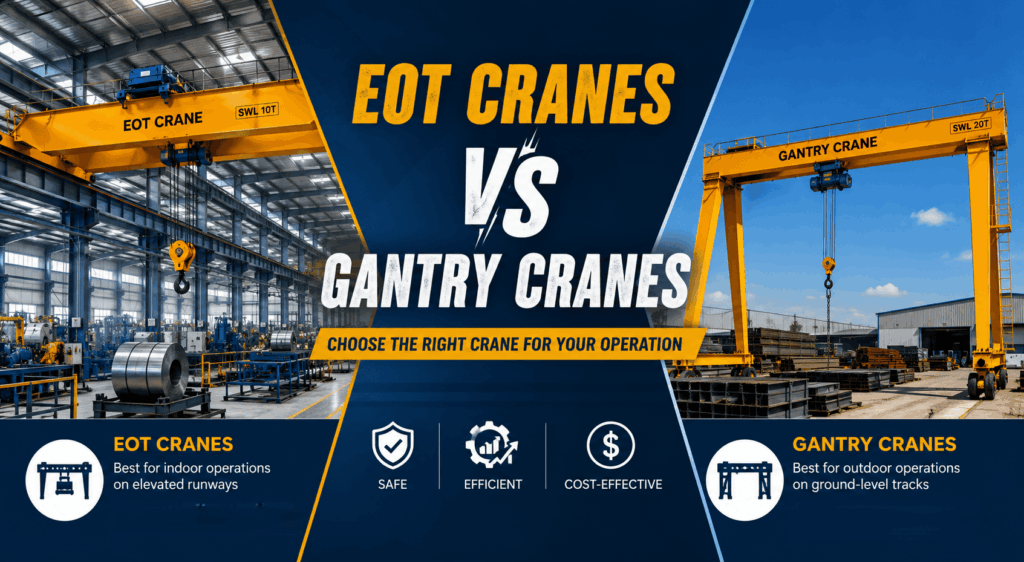
Selecting the right crane could influence productivity, efficiency, and safety significantly. No matter whether you build a new facility or upgrade the existing material handling systems, the decision that the vast majority of businesses frequently need to make is choosing between EOT cranes and gantry cranes. Both crane types are popular within various manufacturing facilities, logistics centers, construction sites, fabrication workshops, warehouses, and many other places where lifting systems are required. Nevertheless, they are intended for different purposes and working conditions. The comparison of them could provide useful information about what type of cranes to select. The following overview would be helpful if you want to find out the differences between EOT cranes and gantry cranes while analyzing the lifting systems produced by an Ahmedabad crane manufacturer. Understanding the Basics of Industrial Cranes Prior to conducting a comparison between the two systems, it is necessary to clarify their basic purposes. Industrial cranes are indispensable lifting devices that are intended for the safe transportation and placement of loads. These devices decrease manual labor, enhance safety within work places, and make it easier to manipulate materials. There are numerous kinds of cranes available on the market. However, EOT cranes and gantry cranes are among the most popular industrial cranes. What Is an EOT Crane? An EOT crane, also known as an Electric Overhead Traveling crane, operates on elevated runway beams installed inside a building. The crane moves along overhead tracks while the hoist travels across the bridge, allowing loads to be lifted and moved throughout the facility. An experienced EOT crane manufacturer India designs these systems to maximize floor space while providing efficient material movement across production areas. Because the crane operates above the workspace, it keeps the ground clear for workers, machinery, and production activities. Where Are EOT Cranes Commonly Used? EOT cranes are commonly found in manufacturing plants, steel processing units, engineering workshops, automotive facilities, warehouses, and assembly operations. Businesses that require frequent lifting and repetitive material movement often prefer overhead crane systems because they provide excellent coverage and operational efficiency. What Is a Gantry Crane? A gantry crane performs a similar lifting function but differs significantly in its structural design. Instead of being supported by building-mounted runway beams, a gantry crane uses legs that run on rails or wheels positioned at ground level. A professional gantry crane supplier typically recommends these systems when overhead runway structures are unavailable or when operations take place outdoors. Gantry cranes are highly versatile and can be used in shipyards, construction sites, storage yards, railway facilities, and large fabrication areas. Why Are Gantry Cranes Popular? One of the biggest advantages of a gantry crane is its independence from building infrastructure. Since it supports itself through its leg structure, businesses can install it without major modifications to existing buildings. This flexibility makes gantry cranes attractive for outdoor operations and facilities where structural support for overhead crane systems may not be practical. What Are the Main Differences Between EOT Cranes and Gantry Cranes? Structural Design The most noticeable difference between these crane types is how they are supported. EOT cranes rely on elevated runway beams attached to the building structure. This design allows the crane to operate entirely above the workspace. Gantry cranes, on the other hand, are supported by vertical legs that move along ground-level rails or wheels. When working with a crane manufacturer in Ahmedabad, understanding this structural distinction is often the first step in selecting the right crane. Space Utilization Space efficiency is a critical consideration for most businesses. EOT cranes maximize floor space because all lifting operations occur overhead. This allows forklifts, workers, and production equipment to move freely below the crane. Gantry cranes occupy some floor space due to their support legs. While this may not be an issue in open outdoor environments, it can affect workflow in confined facilities. For businesses looking to optimize indoor operations, many industrial crane manufacturers recommend overhead solutions. Installation Requirements Installation requirements vary significantly between the two systems. EOT cranes require runway beams, structural supports, and building integration. While this results in excellent operational efficiency, the installation process can be more complex. Gantry cranes generally require less structural modification because they are self-supporting. A qualified gantry crane supplier can often install these systems more quickly, particularly in outdoor environments. The choice largely depends on the facility’s infrastructure and available installation budget. Which Crane Offers Better Lifting Capacity? Both crane types are available in a wide range of capacities. A reputable EOT crane manufacturer can design systems capable of lifting anything from a few tons to hundreds of tons, depending on operational requirements. Similarly, gantry cranes can be engineered for heavy-duty lifting applications. Large gantry cranes are commonly used in shipbuilding, steel yards, and infrastructure projects where massive loads must be handled safely. The actual lifting capacity depends more on engineering specifications than the crane type itself. How Do EOT Cranes Improve Productivity? Continuous Material Flow One of the biggest advantages of overhead crane systems is their ability to support continuous production processes. Since the crane operates above the work area, materials can be transported efficiently between workstations without interfering with other activities. This helps reduce bottlenecks and improve workflow. Manufacturing facilities often rely on EOT cranes to streamline production and maintain consistent output levels. Enhanced Workplace Safety EOT cranes help create a safer work environment by reducing manual handling and minimizing the need for ground-based lifting equipment. Leading industrial crane manufacturers incorporate advanced safety features such as overload protection, anti-collision systems, emergency stop controls, and variable speed drives to further enhance workplace safety. When Is a Gantry Crane the Better Choice? Outdoor Applications A gantry crane is often the preferred option when lifting operations take place outdoors. Construction sites, container yards, storage facilities, and shipyards frequently utilize gantry systems because they do not depend on building structures. An experienced gantry crane supplier can customize the crane to handle varying environmental conditions while maintaining reliable performance. Temporary or Flexible Operations Businesses requiring temporary lifting solutions
How to Choose the Best Crane Manufacturer in Ahmedabad
Choosing a right crane company in Ahmedabad is perhaps one of the most crucial decisions a firm dependent on material handling equipment can make. No matter if it is a manufacturing company, warehouse, engineering workshop, construction site or logistics company, the working efficiency of your crane will directly influence the efficiency of your operations. As the industrial capital of India, there are many companies in Ahmedabad which specialize in designing, manufacturing, installation and servicing cranes. But not all companies are equally competent when it comes to providing quality engineering, design, after sales service and maintenance. In the worst case scenario, choosing the wrong company will result in crane failure. The following blog discusses how to choose the right crane company in Ahmedabad and what to look for in such a company. Why Is Choosing the Right Crane Manufacturer So Important? Cranes used in industries are not common products that can just be chosen according to their prices. Every industry is different regarding its lifting needs, working conditions, weight loads, and safety measures. A crane that performs exceptionally well at one site might not suit another. An experienced manufacturer of industrial cranes located in Ahmedabad takes into account such factors and provides a solution for each of their clients. They do not merely provide products but concentrate on performance, safety measures, and future work needs. When businesses cooperate with industrial crane manufacturers, they receive quality engineering, quality materials, and professional technical assistance all the way through the life cycle of the product. What Should You Look for in a Crane Manufacturing Company? Industry Experience and Technical Expertise Experience plays a major role in determining the reliability of a crane company. It is expected that an experienced crane manufacturing company should have been involved in several industries and knows the difficulties associated with lifting operations in each industry. The manufacturers who have vast experience can be helpful in recommending the correct design, lifting capacity, and working features for the crane. Such companies will also have developed their engineering process, leading to more reliable cranes. While selecting a crane manufacturer in Ahmedabad, you may need to take into consideration the portfolio and the experience of such companies in manufacturing, steel, automobile, pharmaceuticals, and logistic industries. Does Manufacturing Quality Matter? Why Build Quality Directly Impacts Performance The materials used and the process of manufacture are an essential aspect when it comes to performance of the crane. In a good crane manufacturing company, quality steel is used along with quality parts, hoists and electrical components. This ensures longevity and low maintenance crane cost. Inefficient manufacture leads to structural inefficiencies, increased wear and breakdowns. Even though cheaper machines may seem more appealing, they can be more costly in the long run because of maintenance costs. Quality industrial crane manufacturers take care to maintain their standards through quality control and tests. How Important Is Product Range? Can One Manufacturer Meet Different Lifting Requirements? A strong crane manufacturer in Ahmedabad should offer a wide range of lifting solutions rather than focusing on a single product type. Different facilities require different crane systems. Some applications are best suited for EOT cranes, while others may require gantry cranes, goliath cranes, jib cranes, or semi-gantry cranes. Manufacturers with a diverse product portfolio can recommend the most efficient solution based on your operational needs rather than trying to fit every project into a limited product offering. This flexibility often results in better performance and greater long-term value. Why Should You Evaluate EOT Crane Expertise? Understanding the Importance of EOT Cranes The overhead crane forms the core of the material handling process for most of the industrial sites. Therefore, it becomes necessary to find an EOT Crane Manufacturer in Ahmedabad which one can rely upon. EOT cranes form a popular choice in industrial plants, warehouses, fabrication shops, engineering industries and more. The need to design such cranes becomes critical as they run constantly and are involved in the handling of heavy loads. The ideal EOT crane manufacturer in Ahmedabad must have the ability to design both single girder and double girder cranes along with customized design as per the load, span, duty and environment conditions. While selecting EOT Crane Manufacturer in Ahmedabad, ask about the experience in similar projects. What Role Does Customization Play? Every Facility Has Unique Requirements No two industrial facilities are exactly alike. Ceiling heights, workflow patterns, load sizes, and production processes vary significantly. A professional crane manufacturer in Ahmedabad should conduct a detailed assessment before recommending a solution. Rather than offering a one-size-fits-all approach, they should tailor the crane design to your specific needs. Customization may involve adjusting lifting height, span length, control systems, hoist configurations, or safety features. The ability to engineer custom solutions is often what separates leading industrial crane manufacturers from average suppliers. Why After-Sales Support Matters The Relationship Doesn’t End After Installation Many businesses focus entirely on the purchase phase and overlook after-sales service. Even the most reliable crane requires periodic inspections, preventive maintenance, spare parts, and technical support. A dependable crane manufacturing company provides ongoing assistance to ensure equipment continues operating safely and efficiently. Before making a decision, evaluate the manufacturer’s service capabilities. Ask about maintenance programs, response times, spare parts availability, and technical support resources. Strong after-sales service often becomes one of the most valuable aspects of working with experienced crane suppliers Ahmedabad industries trust. How Can You Assess Safety Standards? Safety Should Never Be an Afterthought Industrial cranes handle heavy loads, making safety a critical consideration. A reputable crane manufacturer in Ahmedabad follows established engineering standards, quality assurance procedures, and safety regulations. This includes load testing, structural inspections, electrical safety measures, and operational testing before delivery. Manufacturers committed to safety also incorporate features such as overload protection, emergency stop systems, anti-collision technology, and advanced control systems where required. When comparing suppliers, ask about testing procedures and compliance certifications to ensure the equipment meets industry expectations. Should You Choose Based on Price Alone? Understanding Value Versus Cost Price is an important factor,
How Much Does an Industrial Crane Cost? Key Factors Explained
When companies spend money on purchasing cranes, one of the most common questions is “What is the cost of an industrial crane?” Unfortunately, there is no clear answer since all cranes are engineered to perform a certain range of functions. Such aspects as lifting capacity, type of crane, span, environment where the crane will operate, its automation and installation specifics have an effect on the price. Whether you want to modernize your crane manufacturing company or build a new plant, the knowledge of industrial crane cost factors will help you make the right decision. Instead of paying attention to the purchase price, it is necessary to estimate total cost of ownership that will include such components as installation and operation of the machine. The following guide will give you all the necessary information regarding industrial crane co What Is an Industrial Crane? The industrial crane is a machine that is meant to be able to lift heavy loads for effective movement inside the facility where it will be used. The industrial crane is used in places like manufacturing facilities, warehouses, steel mills, automobile companies, logistics centers, and construction sites. There are different types of industrial cranes; some of the common ones are the overhead crane, gantry crane, goliath crane, jib crane, and semi-gantry crane. Every kind has its price range and special use. This means that due to differences in uses, the industrial crane price differs a lot. How Much Does an Industrial Crane Cost in 2026? The average industrial crane cost can range from a few lakh rupees for smaller systems to several crores for highly customized heavy-duty cranes. A basic single girder crane used in a workshop will naturally cost less than a double girder overhead crane designed for continuous operation in a large manufacturing plant. Similarly, a crane designed to lift 2 tons will be considerably less expensive than one designed for lifting 50 tons or more. Rather than looking for a standard crane price, businesses should focus on identifying the right crane for their workload, safety requirements, and future growth plans. What Factors Affect Industrial Crane Cost? Crane Type Has the Biggest Impact on Price The type of crane selected is one of the most important factors affecting industrial crane cost. A simple jib crane requires fewer components and less structural support, making it one of the more affordable options. In comparison, an overhead crane requires runway beams, end carriages, electrical systems, and additional structural engineering. Double girder cranes generally have a higher industrial crane price than single girder cranes because they provide greater lifting capacity, higher hook travel, and improved durability for demanding operations. The complexity of the crane design directly influences manufacturing, installation, and maintenance costs. Lifting Capacity Influences Material and Engineering Costs This describes the maximum weight that the crane can lift safely. As capacity goes up, all the components of the crane become bigger and sturdier. Some examples of these components include girders, hoists, motors, brakes, ropes, and structural components. To construct a crane capable of lifting 20 tons will take much more work than to build one to lift only 5 tons. For this reason, the lifting capacity has an effect on the price of an industrial crane. Companies should try not to oversize their cranes because of the increased price associated with increased capacity. Span Length and Lifting Height Matter Span is the distance between the crane runways, while lifting height refers to how high materials need to be raised. Longer spans require stronger structural members to prevent deflection and maintain stability. Likewise, greater lifting heights require longer ropes, larger drums, and more powerful hoisting mechanisms. These design requirements increase both the industrial crane price and the complexity of installation. Why Does Overhead Crane Cost Vary So Much? Understanding Overhead Crane Cost The price of the overhead crane will be determined by a number of technical requirements such as the load capacity, span, duty cycle, and control. The single girder overhead crane is used for light and medium duty purposes. They are relatively inexpensive and easy to erect. The double girder overhead crane is chosen when heavy duty work is needed. High overhead crane cost means high durability, better lifting capabilities, and safety. Duty Cycle and Usage Frequency Crane operation is not the same in all cases. The crane that runs just a couple of times each day will incur less wear compared to the crane that operates for several hours throughout different shifts in a day. When the crane is subjected to greater operating demands, the cost of the crane will also be high due to the increased stresses it has to endure. How Customization Affects Industrial Crane Price Advanced Technology and Automation Modern industrial facilities increasingly rely on automation to improve productivity and safety. Features such as radio remote controls, variable frequency drives, anti-sway systems, load monitoring devices, and automated positioning systems can significantly improve crane performance. While these upgrades increase the industrial crane price, they often reduce operational costs by improving efficiency and minimizing downtime. Industry-Specific Design Requirements Every industry has unique challenges. Steel plants may require heat-resistant cranes. Chemical facilities often need corrosion-resistant materials. Pharmaceutical and food-processing facilities may require specialized finishes and hygiene-focused designs. Custom engineering increases the overall industrial crane cost, but it ensures the crane performs safely and reliably in its intended environment. What Should You Know About Crane Installation Cost? Many businesses focus heavily on equipment pricing but underestimate crane installation cost. Installation is a critical phase that affects crane safety, performance, and compliance. Site Preparation Requirements Before installation begins, facilities may need structural modifications, runway beam installation, electrical upgrades, or foundation work. The condition of the existing building can have a major impact on crane installation cost. Facilities designed for crane operation generally require less preparation than older structures being retrofitted. Assembly, Testing, and Commissioning Crane installation involves much more than assembling components. Engineers must align structural elements, install electrical systems, configure controls, conduct load testing, and verify safety performance.
7 Things Every Buyer Must Check When Choosing a 5 ton EOT crane
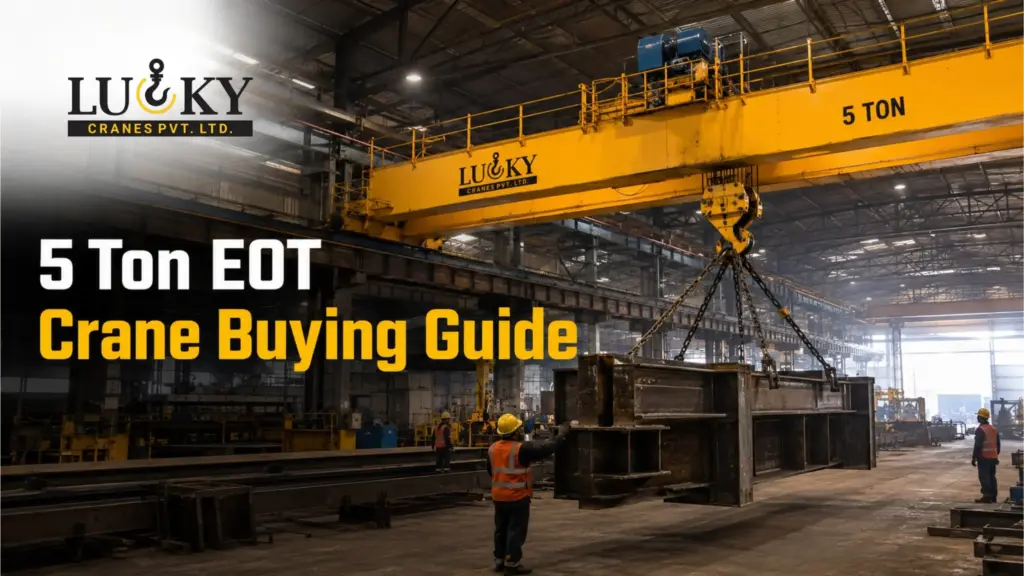
Choosing the wrong crane manufacturer for your EOT crane might result in downtime, non-conformity, and additional expenses for your company. When choosing a suitable EOT crane with a 5-ton load capacity, there is much more to consider than just the price. The following article gives guidance on seven key criteria to look for before you buy. What Is a 5-Ton EOT Crane? An EOT crane (Electric Overhead Travelling Crane) is a bridge crane system that runs on elevated runway rails and uses electric hoists to lift, move, and position heavy loads. A 5-ton EOT crane is ideal for medium, duty material handling in manufacturing plants, fabrication workshops, warehouses, and assembly lines. Key components include the bridge girder, end carriages, electric hoist, trolley, runway beams, and control system. Learn more about EOT crane types and configurations on our product page. Why Choosing the Right EOT Crane Manufacturer Matters Not every supplier meets industrial-grade engineering standards. A low-quality crane can result in: Partnering with a certified, experienced EOT crane manufacturer ensures long-term performance, safety, and value. See how Lucky Cranes approaches quality engineering. 7 Critical Checks Before Buying a 5-Ton EOT Crane 1. Verify Load Capacity and Duty Classification A 5-ton EOT crane must be matched to your actual duty cycle, not just your peak load. Check for FEM (Fédération Européenne de la Manutention) or IS 3177 duty classifications. Duty Class Usage Ideal For M3 (Light) Occasional lifts Storage, assembly M4 (Moderate) Regular operation Fabrication units M5 (Heavy) Continuous use Steel, automotive Tip: Never underrate the duty class. An M3 crane running M5 workloads fails prematurely and voids your warranty. 2. Check Manufacturer Certifications and Compliance A credible EOT crane manufacturer will provide full certification documentation. Always demand: 3. Evaluate Girder Design and Structural Integrity The girder is the backbone of your crane. Always confirm whether you need a single girder or double girder crane, double girder designs offer greater support for span lengths above 12 metres and heavy hook approaches. Verify that the span length and headroom suit your factory layout, and whether a box or I-type girder section is specified (box sections provide superior load strength). 4. Assess the Hoist and Drive Mechanism Quality The hoist is your crane’s workhorse. Key evaluation points: 5. Inspect the Electrical and Control System Modern 5-ton EOT cranes rely heavily on electrical systems. Evaluate: 6. Review After-Sales Support and Spare Parts Availability Cranes with poor service ecosystems are a liability, not an asset. Confirm: 7. Compare Total Cost of Ownership, Not Just Purchase Price The lowest quote rarely delivers the best value. Calculate: Benefits of a Properly Selected 5-Ton EOT Crane Industries That Use 5-Ton EOT Cranes Ready to choose the right 5-ton EOT crane? Lucky Cranes Pvt. Ltd. provides high-quality, precision-engineered 5-ton EOT cranes designed for safety, durability, and long-term performance. Contact Us Conclusion Selecting the wrong EOT crane company can lead to delays, compliance issues, and unforeseen repair costs. Use these seven critical checks to make a confident, informed decision. Lucky Cranes Pvt. Ltd. provides high-quality, precision-engineered 5-ton EOT cranes designed for safety, durability, and long-term performance. Contact our engineering team for a free specification consultation. Frequently Asked Questions What is the standard span for a 5-ton EOT crane? Standard spans for a 5-ton EOT crane range from 6 metres to 20 metres, depending on the bay width of your facility. Custom spans are available through most EOT crane manufacturers. How do I choose between single girder and double girder EOT cranes? Single girder EOT cranes suit lighter loads and smaller spans (up to 12m). Double girder cranes are recommended for spans above 12 metres, heavier hook approaches, or high duty cycle applications. What certifications should a reliable EOT crane manufacturer hold? Look for ISO 9001:2015, IS 3177, IS 807 compliance, and CE marking where applicable. Electrical components should comply with IS 13947 standards. How long does a 5-ton EOT crane last? With proper maintenance, a quality 5-ton EOT crane from a reputed manufacturer lasts between 15 to 25 years. Duty classification matching and regular inspection are key to longevity. What is the typical lead time for a 5-ton EOT crane? Standard 5-ton EOT cranes typically have a 4–8 week manufacturing and delivery lead time. Custom configurations may take 10–14 weeks, depending on specifications.
How to Choose the Right Crane Manufacturing Company for Your Industrial Needs?
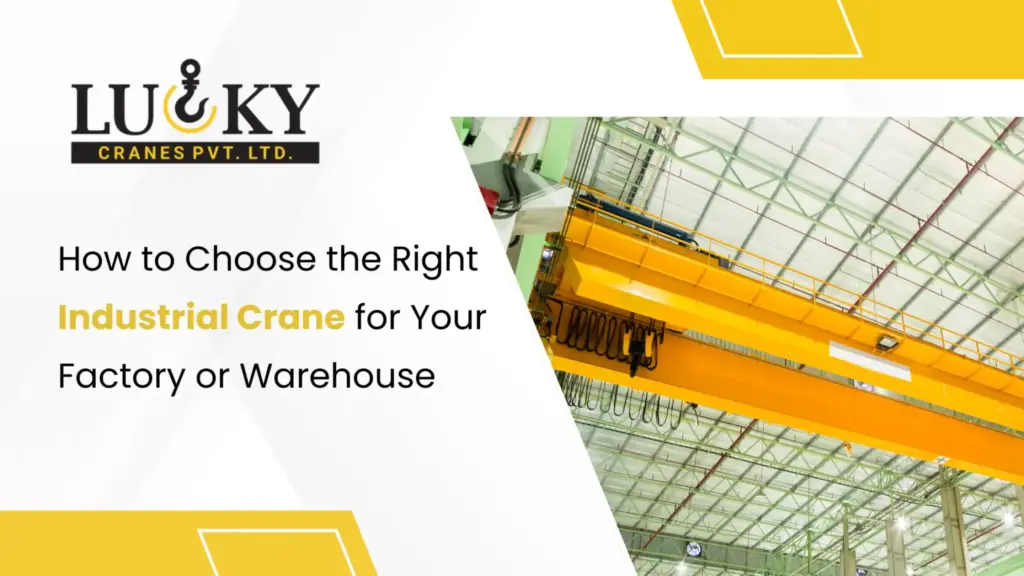
Selecting the right crane manufacturing company is one of the most important decisions for industries that depend on material handling, heavy lifting, and operational efficiency. A reliable crane partner helps improve productivity, workplace safety, and long-term cost savings. However, with multiple manufacturers available in the market, choosing the right supplier can be challenging. Industrial buyers must evaluate product quality, customization capabilities, after-sales support, compliance standards, and industry experience before making a final decision. This guide explains the key factors industries should consider while selecting a trusted crane manufacturing partner for their business operations. Why Choosing the Right Crane Manufacturing Company Matters On the other hand, an experienced crane manufacturing company delivers dependable lifting solutions designed for performance, safety, and durability.Industries such as construction, steel plants, warehouses, power plants, shipping, engineering, and manufacturing heavily rely on cranes for smooth operations. Industrial cranes are long-term investments. Poor-quality equipment can result in: Increased maintenance costs Frequent operational downtime Safety risks Reduced lifting efficiency Higher energy consumption Key Factors to Consider Before Selecting a Crane Manufacturing Company 1. Industry Experience and Expertise Experience plays a major role in crane manufacturing. Companies with years of expertise understand different industrial challenges and can provide customized solutions accordingly. An experienced manufacturer can recommend the right crane configuration based on load capacity, span, height, and operational requirements. When evaluating a manufacturer, check: Years in business Industries served Types of cranes manufactured Previous project portfolio Technical expertise 2. Product Range and Customization Capabilities Every industry has different lifting requirements. Therefore, the selected crane manufacturing company should offer multiple crane solutions and customization options. Common crane types include: Crane Type Application EOT Cranes Heavy industrial lifting Gantry Cranes Outdoor material handling Jib Cranes Small workstation lifting Double Girder Cranes High-capacity operations Single Girder Cranes Medium-duty industrial use Customization features may include: Variable lifting capacities Remote control operation Customized span and height Safety automation Energy-efficient systems Evaluate Manufacturing Quality Standards A reliable crane manufacturing company follows strict quality control processes and international manufacturing standards. Manufacturers using advanced fabrication technologies and precision engineering generally produce more durable and reliable cranes. According to the Industrial Safety and Health Administration, proper crane safety and inspection procedures are critical for industrial lifting operations. Important Certifications to Check ISO Certification BIS Compliance CE Standards Load Testing Certifications Safety Inspection Reports Assess Technology and Engineering Capabilities Modern industrial operations require technologically advanced crane systems.Advanced engineering improves operational efficiency and reduces maintenance requirements.Leading engineering standards are also supported by Crane Manufacturers Association of America. Therefore, industries should evaluate whether the manufacturer uses: CAD-based crane design Automation systems Smart safety controls VFD technology Energy-efficient motors Anti-collision systems Check Installation and After-Sales Support A crane is not just a product; it requires professional installation, regular maintenance, inspections, and technical support. Reliable after-sales support helps minimize downtime and ensures long-term operational efficiency. Before finalizing a crane manufacturing company, verify: Service Support Checklist Installation assistance AMC services Emergency breakdown support Spare parts availability On-site inspections Technical training Compare Safety Features Industrial safety should always be a top priority when selecting a crane supplier.Modern safety systems help industries reduce workplace accidents and improve operational reliability. According to International Organization for Standardization, industrial lifting equipment should comply with globally Verified safety and quality standards. Important Crane Safety Features Overload protection Emergency stop systems Limit switches Anti-sway technology Braking systems Load monitoring systems Evaluate Pricing vs Long-Term Value A high-quality crane may have a slightly higher initial investment but provides better ROI over time. Lowest pricing should never be the only deciding factor. Instead, buyers should focus on overall value, including the following: Product lifespan Energy efficiency Maintenance costs Spare part availability Productivity benefits Importance of Client Reviews and Project Portfolio A trusted crane manufacturing company should have a strong reputation in the market. A proven track record shows reliability and customer satisfaction. Check: Client testimonials Google reviews Industrial case studies Completed project images Industry references Signs of a Reliable Crane Manufacturing Company Look for These Qualities Strong engineering team Transparent pricing Timely project delivery Custom design capability Quality-certified manufacturing Responsive support team These factors help industries choose the right long-term crane partner. Looking for a reliable crane manufacturing company for your industrial operations? Lucky Cranes offers high-performance industrial crane solutions designed for safety, efficiency, and long-term durability. Click Here Why Choose Lucky Cranes? Customized crane solutions Expert engineering consultation Competitive pricing Reliable after-sales support Quality-tested industrial cranes Conclusion Choosing the right crane manufacturing company directly impacts industrial productivity, safety, and operational efficiency. Buyers should carefully evaluate industry experience, product quality, engineering capabilities, customization options, safety standards, and service support before making a final decision. A trusted crane manufacturer not only supplies equipment but also provides long-term operational support and reliable industrial solutions tailored to business needs. FAQs 1. How do I choose the best crane manufacturing company? Choose a company based on industry experience, manufacturing quality, customization options, certifications, and after-sales support. 2. Why is customization important in industrial cranes? Customization ensures the crane matches specific lifting capacities, workspace dimensions, and operational requirements. 3. What certifications should a crane manufacturing company have? Important certifications include ISO standards, safety compliance certifications, and load testing approvals. 4. What industries use industrial cranes? Industries such as manufacturing, construction, steel plants, warehouses, logistics, and power plants commonly use industrial cranes. 5. Why is after-sales support important for cranes? After-sales support helps reduce downtime through maintenance services, spare parts availability, and technical assistance.